Choosing the right installer for a commercial wrap project is not as simple as picking the cheapest quote. Offices and hotels have different demands compared to a home renovation. There is more surface area, more foot traffic, tighter timelines, and usually a brand standard to maintain. Getting it wrong means downtime, visible mistakes, and costly re-dos.
This guide covers what to look for before you hire anyone. It breaks down the key questions to ask, the red flags to watch for, and what a good installation actually looks like in a commercial setting.
What Is Commercial Vinyl Wrapping?
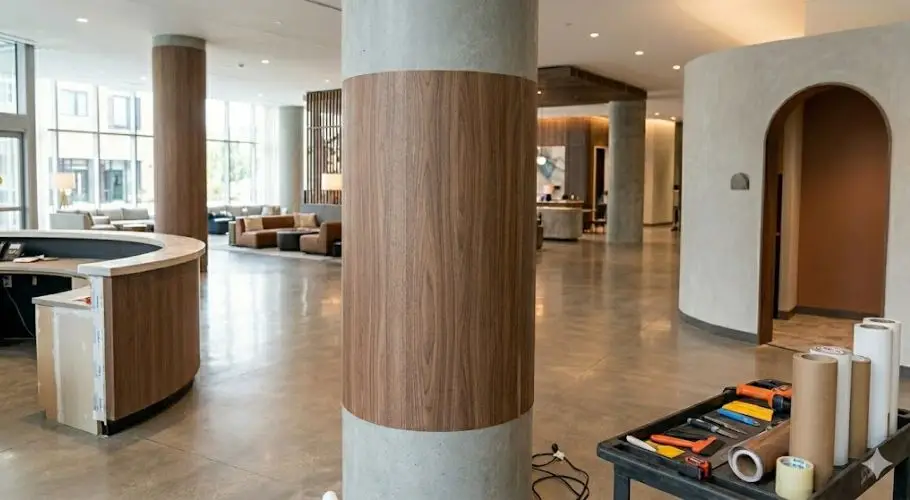
Commercial vinyl wrapping involves applying adhesive vinyl film over existing surfaces. This includes reception desks, elevator doors, wall panels, kitchen cabinetry, bathroom vanities, and more. It is a cost-effective alternative to full replacement and works well in environments where disruption needs to be kept to a minimum.
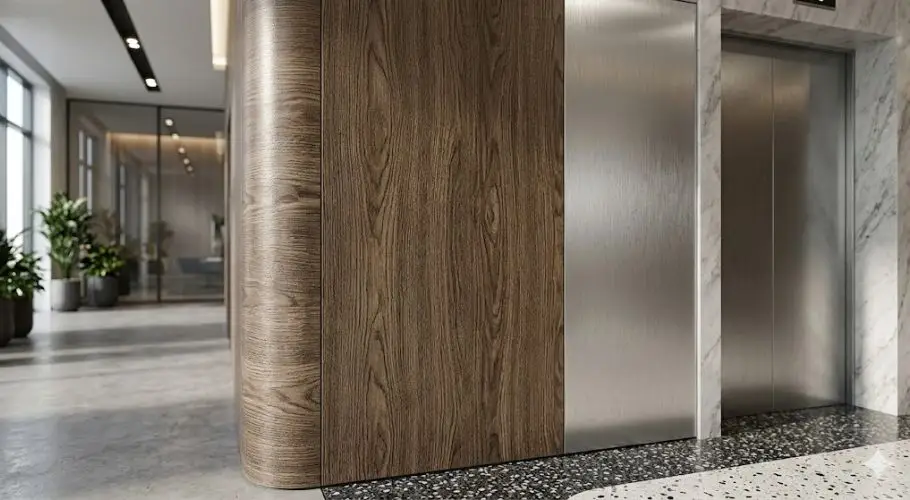
For hotels and offices especially, wrapping is popular because it refreshes interiors quickly without the mess and cost of traditional refurbishment. The finish can mimic wood, stone, metal, or solid colour depending on the film used. When done properly, it is hard to tell apart from the real thing.
Why the Installer Matters More Than the Film
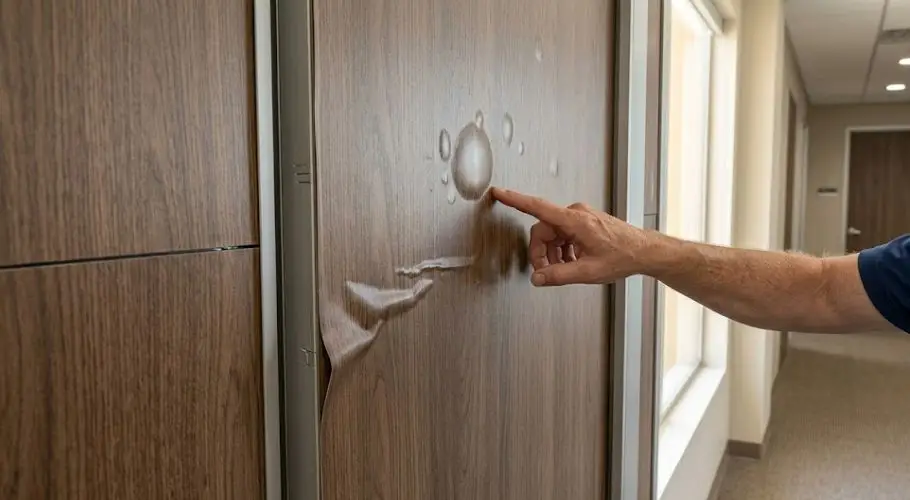
Good quality vinyl film is widely available. The difference between a great result and a disappointing one almost always comes down to the installer. Even premium film will bubble, lift, or peel if it is applied to a poorly cleaned surface or by someone without experience on complex shapes.
Commercial spaces also have more complicated surfaces than residential ones. Curved cabinetry, deep grain textures, large flat panels, and high-use areas like lift doors all require different techniques. An installer with only domestic experience may struggle with the scale and precision that commercial jobs demand.
Things to Look for When Comparing Installers
1. Experience With Commercial Projects Specifically
Ask directly whether they have worked in hotels, offices, or other commercial environments. Residential wrapping is a different skill set. The surfaces, timelines, and expectations are not the same. A good installer should be able to name specific commercial jobs they have completed and explain what was involved.
If you are looking at large-scale interior resurfacing, it also helps to ask how many installers they send to a job. A single person doing a 20-room hotel fit-out is going to take too long and the quality may drop toward the end of a marathon session.
2. A Portfolio of Finished Work
Photos matter. Ask to see before and after images from jobs similar to yours. Look for clean joins, smooth surfaces, neat edges around hardware, and consistent colour across large panels. If the photos only show small pieces or residential kitchens, that tells you something.
Video walkthroughs of completed commercial spaces are even better. They are harder to selectively crop and give a more honest view of the overall finish.
3. The Brands and Films They Use
Not all vinyl film is the same. There are big differences in durability, texture replication, and ease of application. Well-regarded brands in the commercial space include 3M, Avery Dennison, and Bodaq. If an installer cannot name the brands they work with or seems vague about specifications, that is worth questioning.
For a hotel or office, you also want to ask about durability ratings. High-traffic areas need film with stronger adhesion and better resistance to cleaning products. The film used on a hotel lift door needs to handle hundreds of contacts per day.
4. Surface Preparation Process
Good wrapping starts before the vinyl is unrolled. The surface has to be clean, smooth, and properly primed in some cases. Ask the installer what their preparation process involves. A thorough answer should mention degreasing, sanding where needed, checking for moisture, and allowing surfaces to reach the right temperature before application.
Skipping preparation steps is one of the most common causes of early failure. If an installer brushes past this question, that is a warning sign.
5. How They Handle Large or Complex Areas
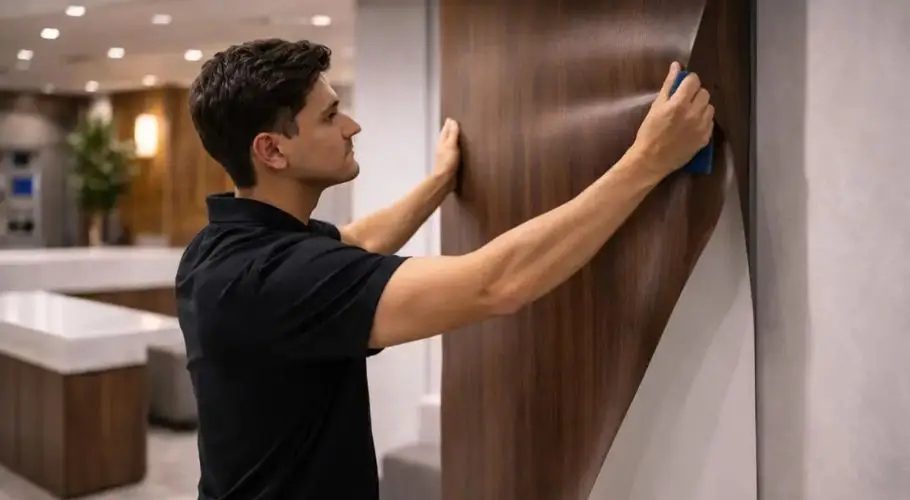
For commercial projects, the ability to work on large uninterrupted panels without visible seams is important. Ask how they manage joins on wide surfaces. Ask whether they use heat guns, squeegees with edge protectors, or post-heating techniques to ensure the film conforms properly to edges and curves.
Some of the trickier areas in offices and hotels include:
- Lift doors and surrounds
- Floor-to-ceiling cabinetry
- Curved reception desks
- Bathroom vanity units with hardware cutouts
- Structural columns with uneven surfaces
An experienced installer will have a clear method for each of these. If they seem uncertain, they probably are.
6. Timeline and Working Hours
This is particularly relevant for hotels and working offices. Ask whether they can work during off-peak hours or outside business hours to reduce disruption. Some installers will charge a premium for evening or weekend work. Others build flexible scheduling as standard.
A realistic timeline is also important. Be cautious of anyone who promises an unusually fast turnaround on a large job. Speed sometimes comes at the expense of quality, especially with adhesive vinyl that needs time to properly set.
7. Warranty and Aftercare
Ask what warranty they offer on their workmanship separate from the film manufacturer warranty. A confident installer will stand behind their work for a reasonable period. Twelve months is a reasonable minimum. Some will offer longer.
Also ask what the aftercare process looks like. What cleaning products are safe to use on wrapped surfaces? What should staff avoid doing? A good installer will give you clear guidance on this rather than leaving you to figure it out.
Questions Worth Asking Before You Sign Anything
If you are not sure where to start, here is a straightforward list of questions to run through:
- Can you share examples of commercial projects similar to mine?
- What film brands do you use and why?
- How do you prepare surfaces before application?
- What is your process for large panels and avoiding visible seams?
- Can you work outside business hours if needed?
- What does your warranty cover and for how long?
- Do you subcontract any of the work?
- How do you handle defects or issues after installation?
The answers will tell you a lot. A confident, experienced installer will give you clear, detailed responses. Vague or dismissive answers suggest someone who either lacks experience or is not used to being held accountable.
Red Flags to Watch For
Not every warning sign is obvious. Here are a few that are easy to miss:
- No fixed business address: This matters if something goes wrong after the job is done.
- No insurance: Always ask for evidence of public liability insurance before work starts.
- Unusually low quotes: These often reflect shortcuts on preparation, film quality, or labour.
- Pressure to decide quickly: A genuine installer will give you time to compare options.
- Reluctance to put terms in writing: A basic written agreement protects both sides.
A Smarter, Greener Way to Renovate
In 2026, a “rip-out and replace” renovation isn’t just expensive, it is wasteful. Most office and hotel furniture is structurally fine, it just looks dated. Sending perfectly good desks, doors, and panels to a landfill is a huge environmental hit that many modern companies are trying to avoid.
Vinyl wrapping is a “circular economy” solution. By resurfacing what you already have, you can reduce renovation waste by up to 70 percent. It is a way to get a premium, modern look while meeting sustainability goals. You are extending the life of your existing fixtures instead of paying for new raw materials to be manufactured and shipped.
Beyond the planet, this approach also protects your indoor environment. Professional architectural films like Bodaq use low-VOC adhesives, which means there are no toxic fumes or “new paint” smells that force you to close off rooms. It is a cleaner way to work that keeps your air quality high and your waste low.
Making the Final Decision
At the end of the day, picking an installer is an investment in how your business looks. The cheapest quote usually isn’t the best deal if the wrap starts peeling in six months or looks messy. The cost of fixing bad work and the stress of closing down your office or hotel rooms again just isn’t worth it.
Look for a team that is easy to talk to and has a solid portfolio of commercial work. You want someone who understands that in a professional space, the small details matter. By asking the right questions now, you can make sure the final result looks great for your guests and your staff.
Ready to start? If you are looking to refresh your space without the mess of a full renovation, we can help. Contact the Resurface Wraps team today to talk about your next project.