Picking a vinyl wrap colour is exciting. But a lot of people choose a sample under one type of light and then wonder why it looks completely different once it’s installed. That’s not a flaw in the wrap. That’s just how light and surface finishes work together.
Understanding how lighting affects vinyl wrap finishes can save you a lot of second-guessing. Whether you’re wrapping a kitchen, an elevator, or a feature wall, the light in that space will shape how the final result looks every single day.
Why Lighting and Vinyl Wraps Are Closely Linked
Vinyl wraps aren’t flat surfaces in the traditional sense. Many of them mimic real materials like timber, stone, concrete, and brushed metal. These finishes have surface texture. They have peaks and grooves. And those tiny details catch light differently depending on where the light comes from and what type it is.
This is especially true for textured finishes. A wood grain wrap, for example, might look warm and rich under soft downlights but appear dull and washed out under harsh fluorescent lights. The wrap hasn’t changed. The light has. That’s the core thing to understand before you commit to any colour or finish for your space.
How Lighting Differs Across Commercial Spaces
Not all commercial spaces use light the same way. A hotel lobby is lit very differently from a hospital corridor or a retail store. And because Resurface Wraps works across hospitality, corporate, retail, healthcare, and institutional environments, lighting conditions can vary quite a lot from one project to the next.
Corporate and Office Environments
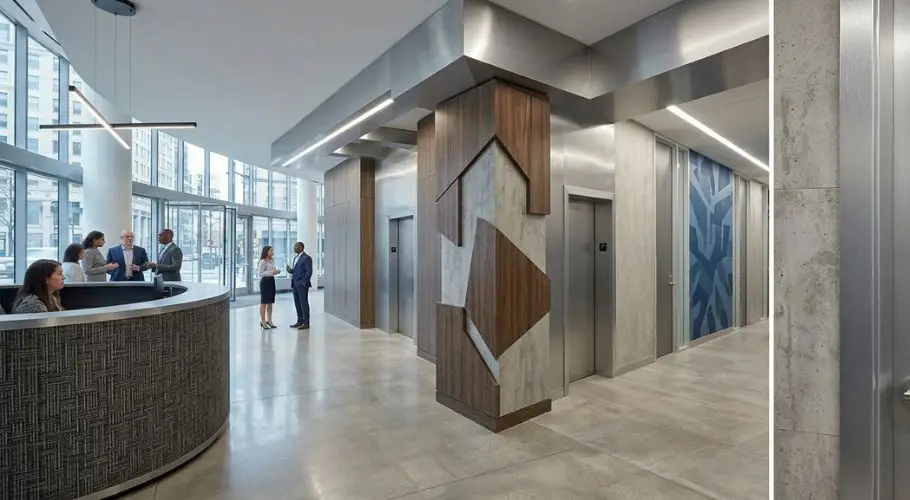
Corporate spaces almost always run on cool, bright overhead lighting. This includes open-plan offices, reception areas, and meeting rooms. Under this kind of light, stone and concrete-effect wraps read cleanly and feel intentional. They don’t fight the light, they suit it. Wood finishes can still work here but tend to look more formal and less warm than they would in a residential or hospitality setting.
The same applies to elevator interiors and door wraps in corporate buildings. These surfaces are seen in passing, often under direct downlights. A finish that looks flat under that kind of lighting won’t leave the impression you’re going for. Matte and satin finishes in mid-range tones tend to hold up better in these environments than very dark or very light gloss options.
Retail and Healthcare Settings
Retail lighting is usually the brightest and most deliberate of all. Stores use lighting as a design tool, and wrap finishes behave accordingly. Gloss and metallic finishes can look striking in retail because the lighting is often set up to make surfaces pop. Abstract and solid-colour wraps also carry well in these spaces because the brightness of the light keeps them vivid rather than flat.
Healthcare environments are a different story. Lighting in hospitals and clinics is functional and consistent, usually cool and even. Wrap choices here tend toward neutral stone, solid, and concrete finishes that hold up under clinical light without looking stark. Wall wraps and casework surfaces in healthcare settings need to look clean and professional, and the right finish choice under that type of lighting makes a real difference to how the overall space reads.
| Space Type | Common Lighting Style | Recommended Finishes | Avoid If Possible |
|---|---|---|---|
| Corporate Office | Cool overhead LED | Concrete, stone, satin neutrals | High-gloss black |
| Reception Areas | Mixed decorative lighting | Wood grain, satin, metallic accents | Cheap-looking bright gloss colours |
| Retail Stores | Bright focused lighting | Gloss, metallic, bold solids | Flat dark mattes |
| Healthcare | Even cool lighting | Neutral matte, stone, solid colours | Excessive gloss |
| Hospitality | Warm layered lighting | Timber, textured finishes, feature metallics | Clinical greys |
How Different Vinyl Wrap Finishes Respond to Light
The finish type is just as important as the colour when it comes to lighting. Here’s how the main vinyl wrap finish types behave.
Gloss Finishes
Gloss wraps are highly reflective. In a room with plenty of natural light or bright downlights, a gloss finish will bounce light around the space. This can make a room feel larger and more open, which is sometimes exactly the goal. But gloss under harsh direct lighting will also highlight every fingerprint, dust mark, and surface imperfection. If you’re using gloss in a busy area, consider the maintenance side of that.
Matte Finishes
Matte surfaces absorb light rather than reflect it. This gives them a smooth, understated look that holds up well under various lighting conditions. They’re very popular in contemporary interiors because they don’t compete with the light, they just sit quietly. The one thing to watch is that very dark matte wraps in poorly lit spaces can almost disappear. Dark matte greys and blacks need enough ambient light to read as intentional rather than shadowy.
Textured Finishes
Textured vinyl wraps, including wood grain, linen, concrete, and leather effects, rely heavily on directional light to show their depth. When light hits them at an angle, the surface texture becomes visible and the wrap looks three-dimensional. Flat, direct overhead lighting can wash this depth out entirely, making the wrap look printed rather than textured. If you want a textured finish to really show up in your space, think about where the light is coming from and whether it will catch the surface at an angle.
Metallic and Shimmer Finishes
Metallic wraps contain reflective particles that need direct light to activate the shimmer. Without good lighting, a metallic gold wrap can read as a flat mustard yellow. A chrome or brushed silver wrap might look more like a muted grey. These finishes reward spaces with strong, directional light sources. They’re a great fit for feature walls in retail or hospitality settings where lighting design is already part of the brief. If you’re unsure which finish suits your project, it’s worth looking at the full range of vinyl wrap finishes available to compare how they’re described and shown.
| Finish Type | Best Lighting Conditions | How It Looks | Things to Watch |
|---|---|---|---|
| Gloss | Natural light, bright downlights | Reflective, vibrant, spacious | Shows fingerprints, glare, imperfections |
| Matte | Mixed lighting, soft ambient light | Clean, modern, understated | Dark tones can look flat in dim spaces |
| Satin | Most environments | Balanced sheen, versatile | Less dramatic than gloss |
| Textured (Wood/Concrete) | Directional or angled light | Depth, realism, tactile look | Can look flat under direct overhead light |
| Metallic | Strong directional lighting | Shimmer, premium, eye-catching | May appear dull in low light |
Tips for Testing Vinyl Wrap Samples in Your Space
Before you commit to any wrap for a large surface, testing it in the actual environment is the most reliable step you can take. Here’s a simple way to do it.
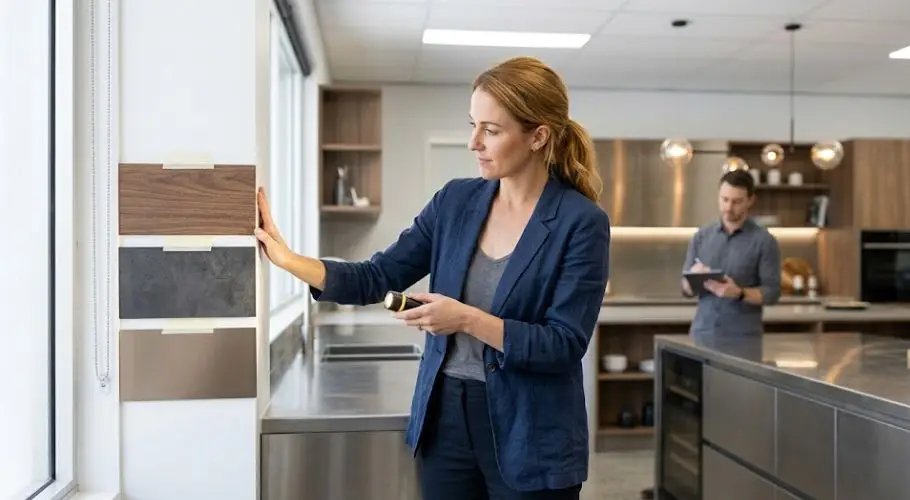
- Pin or tape the sample vertically: to the surface you plan to wrap. Light behaves differently on vertical surfaces than horizontal ones. Laying a sample flat on a bench gives you an inaccurate read.
- Leave it for 24 hours: Check it in the morning, during the day, and in the evening under your artificial lights. You’ll quickly see how much the colour shifts.
- Rotate the sample 90 degrees: This is especially useful for wood grain and brushed metal wraps. The grain direction relative to the light source changes how much depth and texture comes through.
- Check it under all your light sources: If the room has both downlights and a large window, test under both. Mixing natural and artificial light is common, and the combined effect can be different from either one alone.
What to Watch Out For When Choosing a Finish
A few common mistakes come up when people don’t factor lighting into their wrap decision. It’s worth knowing what they are so you can avoid them.The most common one is choosing a finish based on a sample seen under completely different lighting. A dark wood wrap that looked rich and deep in a warmly lit showroom might look flat and heavy in a corridor with cool overhead lights. The wrap is the same. The light is not.
Another thing to watch is choosing very dark matte finishes for spaces that don’t get much natural light. Dark mattes absorb almost everything. Without enough ambient light, they can make a surface disappear into the background rather than read as a deliberate design choice. If your space is on the dimmer side, lighter tones or satin finishes in the same colour family will usually give you a better result.
See the Difference Light Makes Before You Commit
The best way to understand how lighting affects vinyl wrap colours in your specific space is to get physical samples and test them on site. That step alone removes most of the guesswork. Pin them to the actual surface, leave them up for a full day, and check them morning and evening. What you see in those conditions is what you’ll live with after installation.
Lighting is one of the things that’s easy to overlook when you’re focused on picking a colour or finish you like. But it’s often the deciding factor between a result that feels intentional and one that falls a bit flat. Getting it right doesn’t take much extra effort. It just takes a bit of planning before the wrap goes on.
Ready to see how our finishes look in your space? Contact Resurface Wraps today to request your samples and start your transformation.
Frequently Asked Questions
Why does my vinyl wrap look different from the sample I chose?
Which vinyl wrap finish holds up best under different types of lighting?
Satin and matte finishes tend to be the most consistent across different lighting conditions because they don’t reflect light as sharply. Gloss and metallic finishes are more reactive to changes in light direction and intensity.
Does the type of lighting in a commercial space really affect how a wrap looks?
Can I use dark vinyl wraps in a space with limited natural light?
You can, but you need to be careful. Dark matte wraps absorb light and can make a dimly lit space feel smaller and heavier. If you’re set on a dark finish, pair it with well-positioned artificial lighting to make sure the surface still reads as intended.
How do I know if a metallic vinyl wrap will look good in my space?
Metallic finishes need direct or angled light to activate the shimmer. If your space has only diffused or indirect lighting, a metallic wrap may look flat or dull. Test a sample in the space under your actual light sources before committing to a large area.