Hiring someone to wrap your doors, walls, or cabinets is a bigger decision than it looks. Most people spend their energy picking the perfect finish and barely think about who is going to apply it. That’s backwards. A skilled installer can make an ordinary film look custom. A careless one can turn a top shelf film into a mess in a single afternoon.
That is why the questions you ask before signing a contract matter so much. Most property owners focus on price first. Price is important, but it should not be the only thing you compare. The right questions tell you whether someone actually knows what they are doing, or whether they are guessing their way through your project.
Why the Installer Matters as Much as the Film
Two installers can use the exact same roll of vinyl and aAend up with completely different results. One preps the surface the right way and takes real time on the edges so everything lays flat. The other rushes through it and hopes nothing lifts later. Both jobs can look okay on day one. The difference usually shows up weeks later, once the film has had time to move.
This is especially true for commercial spaces. A hotel hallway or a row of elevator doors gets bumped and cleaned constantly, in a way a quiet residential hallway never does. A rushed wrap will not hold up to that kind of use. Asking the right questions upfront is really just a way to find out if someone takes the work seriously or treats it as a side job.
Questions About Experience and Background
Before getting into materials or pricing, find out who you are actually hiring. A few direct questions go a long way here.
- How long have you been installing architectural or vinyl wraps specifically?
- Have you worked on commercial properties before, or mostly residential jobs?
- Can you show me photos or video of a finished project similar to mine?
- Are you trained or certified by the film manufacturer?
- Do you do the work yourself, or do you subcontract it out?
That last question matters more than people realize. Some companies sell the job, then hand it off to a subcontractor you never meet. There is nothing wrong with subcontracting on its own, but you want to know who is actually showing up and whether they have been vetted.
What to Ask About the Materials They Use
Not every vinyl film performs the same way. Cheaper film tends to fade faster and scratch easier in high traffic spots. Better brands like 3M DI-NOC, Belbien, Reatec, and Benif hold up much longer because they are built for commercial wear.
Ask your installer which brand they plan to use and why. A confident answer will name the brand directly and explain what makes it a good fit for your surface, whether that’s a door or a piece of casework or millwork. If they are vague about the brand or cannot tell you anything about fire ratings, that is worth a second look, especially for any wrap going into a commercial interior.
A couple more questions are worth asking about the material itself:
- Is the film Class A fire rated for interior use?
- Does it come with a manufacturer warranty, and how long is it?
- Will the finish look the same under different lighting?
- Can I see or order a physical sample before committing?
Questions About the Installation Process Itself
This is the part most people skip, and it is probably the most important one. The process behind the scenes is what decides whether a wrap lasts five years or fifteen.
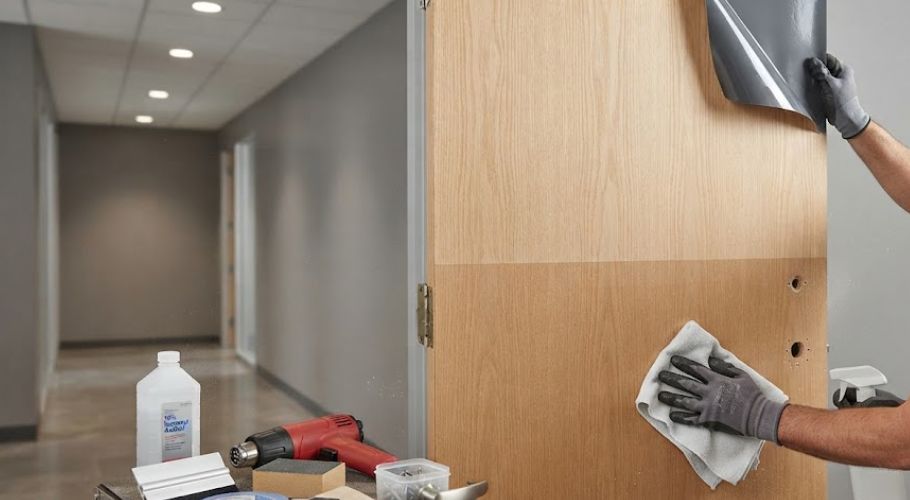
A good installer should walk you through their steps without hesitating. They should mention cleaning and degreasing the surface, and checking for damage underneath, before anything gets applied. Skipping that prep work is one of the most common reasons a wrap fails early, usually showing up as bubbles or peeling edges within the first few weeks.
Worth bringing up directly during that part of the conversation:
- How do you prepare the surface before applying the film?
- How do you handle seams on large or curved surfaces?
- Do you use post heating to lock down edges and corners?
- What happens if you find damage on the surface once you start?
- How long does the film need to set before normal use resumes?
A Quick Reference for Your Next Conversation
If you only have a few minutes with an installer, these are the questions that give you the most useful information.
| Question to Ask | Why It Matters | What a Good Answer Sounds Like |
|---|---|---|
| How many commercial projects have you completed? | Commercial surfaces are larger and more complex than residential ones. | They name specific jobs and describe the surfaces involved. |
| What brand of film do you use? | Quality and durability vary a lot between brands. | A direct brand name, with a reason it fits your project. |
| How do you prep the surface? | Poor prep is the top cause of early failure. | A clear, step-by-step answer without hesitation. |
| What is your warranty on workmanship? | Film warranties and installer warranties are different things. | A specific time period, usually a year or more. |
| Can you work around our business hours? | Disruption matters for hotels, offices, and retail spaces. | A flexible answer, possibly evenings or weekends. |
| What happens if something goes wrong later? | Tells you how they handle problems after the job is done. | A clear process for repairs or re-dos. |
Questions About Timeline and Disruption
For commercial spaces, timing is often the deciding factor. A hotel cannot really shut down a wing for two weeks just to get doors wrapped, and most offices cannot afford to block off the front desk either. Ask your installer directly how they plan to work around your actual schedule.
Find out if they can work in phases or after hours to cut down on disruption. Also ask how long the full project will realistically take from start to finish. Be a little cautious if someone promises an unusually fast turnaround on a large job. Vinyl needs time to set properly, and rushing that part to hit a deadline often shows up later as lifting or bubbling.
It also helps to ask about these specifics:
- Can the work be done outside normal business hours?
- How many people will be on site each day?
- What is the realistic timeline for a project this size?
- Will there be noise, smell, or dust during installation?
Warranty, Aftercare, and What Happens If Something Goes Wrong
Even a great installation can run into problems down the road. What matters is whether your installer stands behind their work. Ask for a workmanship warranty that is separate from the manufacturer’s warranty on the film itself. Twelve months is a fair minimum for most commercial work, and some installers offer more.
Also ask what aftercare looks like in practice, including what cleaning products are safe and what staff should avoid doing. If your installer cannot give you a straight answer on cleaning, you will likely end up figuring it out the hard way, sometimes by damaging the finish with the wrong product. A good installer wants to hear about it quickly if you ever spot bubbling or lifting edges. They should not brush off the concern.
Getting This Right From the Start
Asking good questions before you sign anything does not cost you anything but a little time, and it tells you most of what you need to know about whether someone is going to do the job properly.
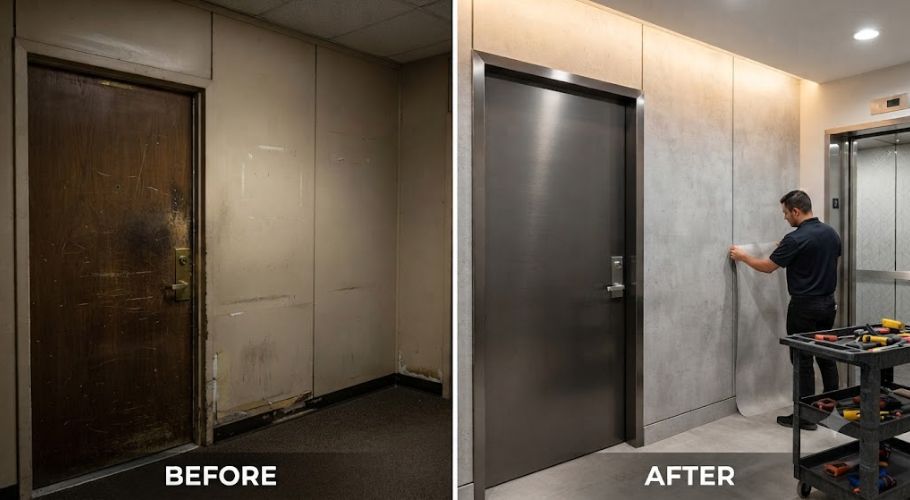
A vinyl wrap holds up about as well as the person installing it does their job. Ask the questions and pay attention to how they’re answered. Trust your gut if something feels rushed or vague. Our project portfolio has before and after photos from real hotel, office, and retail projects if you want to see what a properly handled job looks like. When you are ready to talk through your own project, reach out to our team and we can walk you through how we’d approach it.