An older commercial building can be structurally solid and fully functional, and still look like it belongs to another decade. The roof holds up fine and the wiring passed inspection years ago, but the doors are scuffed and the lobby walls look tired. Tenants or customers notice before they even walk in. Modernizing a property like this does not always mean a full renovation. In a lot of cases, it means updating the surfaces people actually see and touch every day.
This guide covers what makes an older commercial property look dated, what a full renovation actually costs compared to a lighter touch update, and where a smaller investment can change how the whole building feels without months of construction.
Why Older Buildings Look Dated Fast
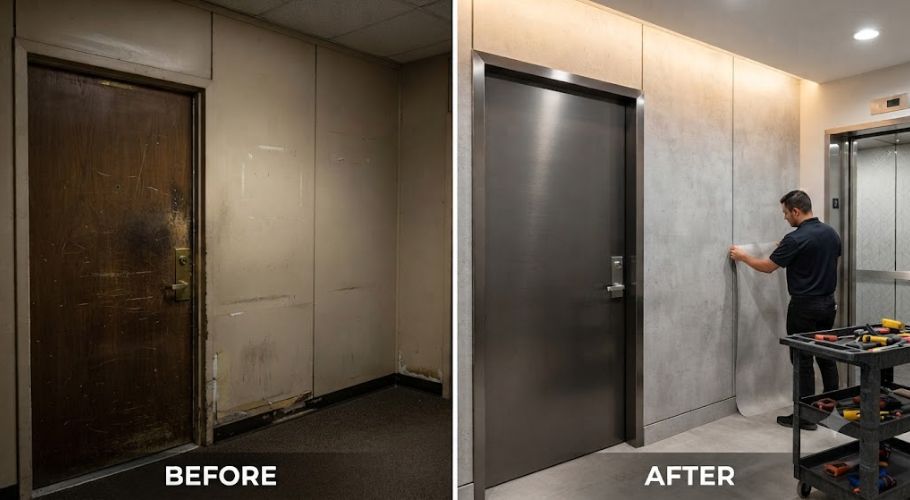
A building does not age evenly. The structure and the mechanical systems can last for decades with basic maintenance, but finishes do not hold up nearly as long. Doors get scratched from daily traffic, and wall panels near entrances pick up scuffs and fingerprints just as fast. Laminate on counters and casework starts to peel at the edges long before anything structural needs attention.
Buildings that are only 15 or 20 years old can already look outdated next to something newer down the street because of this gap. The structure is not falling apart. It just has not been updated since it was built, and the surfaces that see the most contact are the ones showing it. Owners often assume the fix has to be a full gut renovation, when the real problem is usually limited to a handful of high visibility surfaces.
Signs Your Property Needs an Update
A few warning signs tend to show up before an owner or property manager decides it is time for an update.
- Entry doors and interior doors look scratched, dull, or mismatched from wear
- Lobby or hallway walls have visible scuffs, water stains, or dated finishes
- Elevator interiors feel dark or worn compared to the rest of a renovated building
- Reception desks, counters, or built in casework look chipped or outdated
- The building’s exterior or storefront no longer matches the quality of what tenants or customers expect
- Prospective tenants or buyers comment on the look of the space during walkthroughs
Rebuild Cost Compared to Resurfacing Cost
Tearing out a surface and rebuilding it from scratch means demolition, disposal, new materials, and skilled trade labor for framing, drywall, and finishing. It gets the job done, but it comes with a longer timeline and a bigger price tag, especially in a building that still needs to operate during the work. Permits and inspections add more time on top of that, particularly for anything involving structural changes or fire rated doors and hardware.
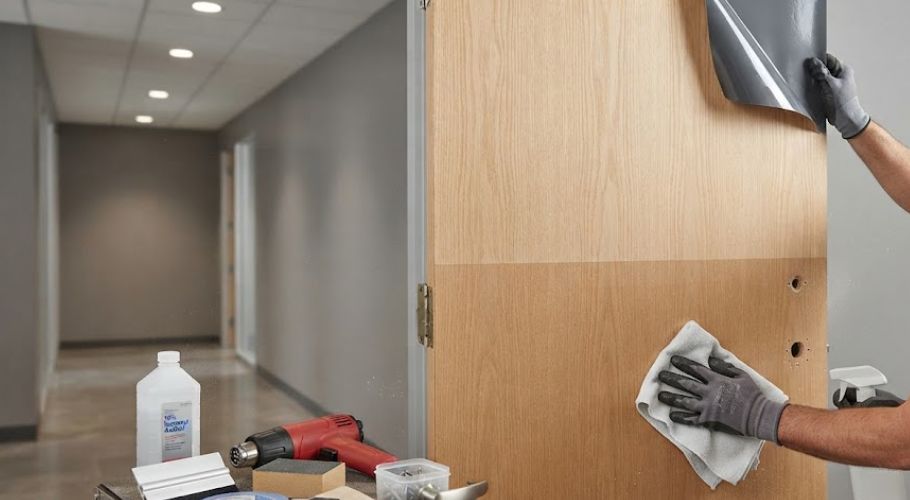
There is a faster way to get a similar result. Instead of tearing out a worn door or wall panel, a layer of architectural vinyl film gets applied directly over the existing surface. The result looks like a new material, often mimicking wood, metal, or stone, without the demolition or rebuild. For a property with dozens or hundreds of doors and wall sections, the difference in cost and downtime adds up fast.
| Features | Resurfacing | Full Replacement |
|---|---|---|
| Typical cost per door | Around $290 to $520 | Often over $1,000 for a comparable fire rated door |
| Install time per door | About 30 minutes | Can take a full day or more with framing and finishing |
| Disruption to operations | Minimal, doors stay on their hinges | Higher, often requires closing the area |
| Materials sent to landfill | None, existing surface stays in place | Old doors and panels are removed and disposed of |
| Fire safety | Meets Class A fire rating standards | Depends on the new material chosen |
Where Resurfacing Works Best
Some surfaces in a commercial building take more daily wear than others, and these tend to be where a resurfacing update makes the biggest visible difference.
- Commercial doors: in office buildings, retail spaces, and medical suites get handled constantly and are usually the first thing to look worn.
- Wall surfaces: in lobbies, hallways, and elevator entrances scuff faster than the rest of the building because of foot traffic.
- Casework and millwork: like reception desks and built in cabinetry, can look brand new again without tearing out the base structure underneath.
- Elevator interiors and landings: matter more than most owners expect, since this is often the first thing a tenant or visitor sees inside the building.
- Storefronts and building exteriors: set the tone before anyone steps inside, and an outdated facade can undercut everything else about the property.
Doing the Work Without Closing the Building
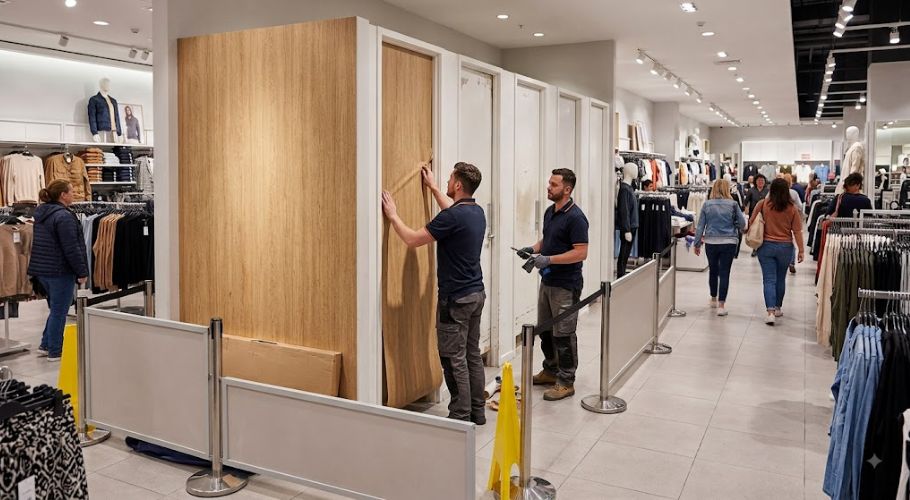
A building with tenants, employees, or customers cannot always afford to close sections off for weeks at a time. Owners often put off updates for years for exactly this reason, even when they know the space needs it. Resurfacing work can usually happen after hours or in smaller sections, so the building keeps operating while the update happens around it.
There is also a practical sustainability angle to consider. Resurfacing keeps old doors, panels, and casework out of the landfill instead of replacing them outright, which can support LEED credit goals on buildings that are tracking them. That matters more to property owners now than it used to, especially for buildings competing for corporate or institutional tenants who care about sustainability. It is a simple reason a lighter touch update can make more sense than tearing everything out and starting over.
Common Mistakes to Avoid
A few decisions tend to slow down or overinflate the budget on a modernization project.
- Assuming every worn surface needs a full replacement instead of checking if it can be resurfaced
- Updating only the lobby and skipping high traffic areas like elevators and hallway walls
- Not comparing resurfacing and replacement costs side by side before committing to a plan
- Scheduling work during business hours instead of after close or during slow periods
- Ignoring the exterior or storefront while focusing only on interior finishes
A Simpler Way to Update an Older Property
A commercial building does not need to be gutted to feel current again. Most of what makes a space look dated comes down to a handful of surfaces that see daily wear, like doors, walls, and casework. Elevators and the exterior facade wear the same way, often long before anything structural is affected. Updating those surfaces with resurfacing instead of full replacement can bring a property up to date faster, with less disruption to the people using it every day, and without the cost of a full construction project.
If you are weighing options for an older property, it helps to see what resurfacing looks like on a finished space before deciding. Resurface Wraps keeps a full library of finishes in wood, metal, and stone looks. Reach out here to talk through what a lower cost, lower disruption modernization plan could look like for your property.