Every retail owner reaches a point where the store starts to look tired. The paint is scuffed. The doors have dents. The fitting rooms look like they haven’t changed since the store opened. But the idea of closing for renovation feels almost worse than the outdated look itself. It usually means lost sales, and some customers just try the store next door instead.
The good news is that a full shutdown is rarely necessary anymore. Store updates today can happen in phases, overnight, or around business hours, so the doors stay open the whole time. Whether it’s a single boutique or a chain with locations across a few states, the same basic planning applies. This guide walks through how to plan a retail refresh that keeps your registers ringing while the work gets done.
Why Store Downtime Costs More Than the Renovation
A lot of store owners budget for materials and labor, then forget to budget for the days the store sits closed. That’s often the biggest cost of all. A week of closed doors means a week of lost foot traffic and staff hours that aren’t bringing in any sales.
There’s also the customer habit problem. People form routines around where they shop. If your store is dark for even a few days, some of those customers find a new routine somewhere else, and getting them back takes real effort. So more retailers now lean toward renovation approaches that skip the closed sign completely.
Start With a Walkthrough Before You Call a Crew
Before any renovation work begins, walk your store the way a customer would. Note what actually needs to change versus what just feels old out of habit.
- Check doors, casework, and counters for wear versus what’s just outdated in style
- Note which areas get the most foot traffic and which are quieter
- Decide if the goal is a full look change or a targeted refresh
- Take photos so you can compare before and after later
- Talk to staff, since they often notice wear spots customers point out
A short walkthrough like this helps you avoid paying for a bigger renovation than you actually need.
Break the Project Into Small Zones
One reason stores end up closing for days is that everything gets scheduled at once. Trying to update doors, walls, counters, and fixtures all in the same week gets messy fast, and it can make the space unsafe for shoppers to walk through.
A better approach is splitting the store into zones and tackling them one at a time. Maybe the entrance and storefront get updated first, then the checkout counters, then the fitting rooms. Each zone can be finished in hours rather than days, and the rest of the store keeps operating like normal. This is closer to how retail store renovation teams work now, going section by section instead of gutting the whole space.
Choose Materials That Update Fast Without Construction
The materials you pick matter as much as the schedule. Traditional renovation means demolition, dust, and drying time. There are faster options that skip most of that.
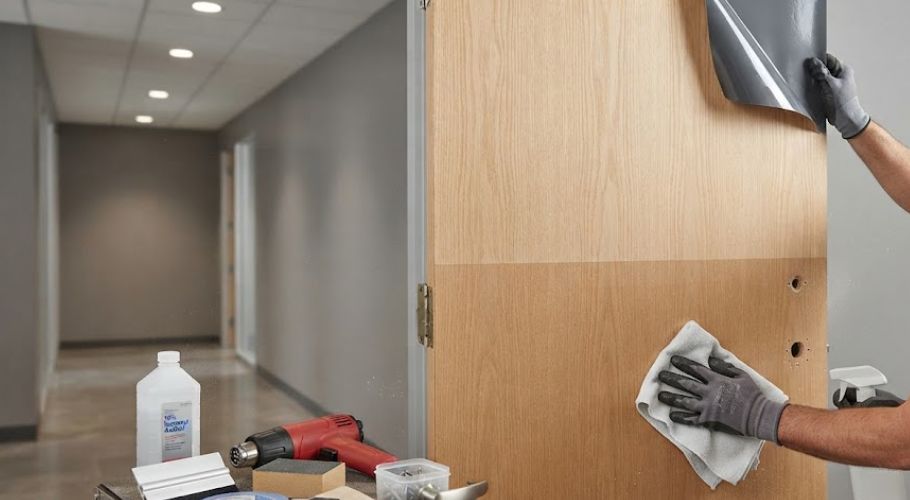
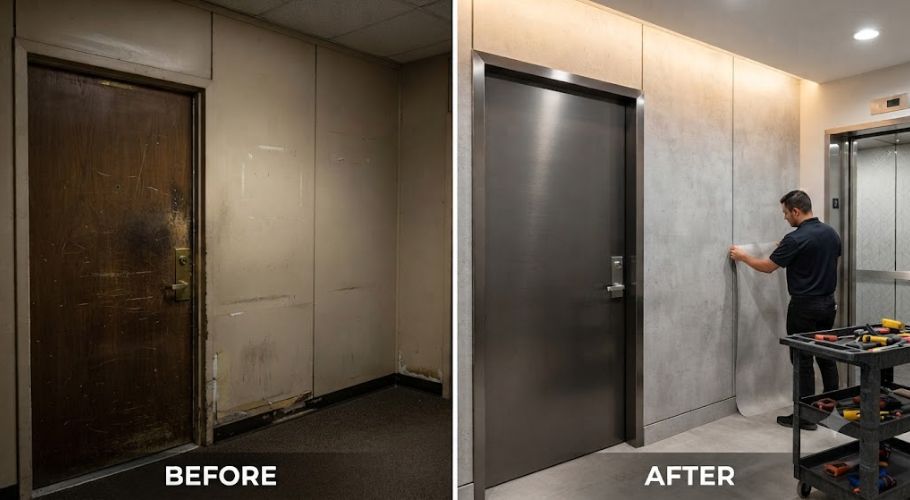
- Vinyl wrap film can resurface doors, walls, and casework without removing the original surface
- Work can often be scheduled around opening hours, so shoppers rarely see a crew mid-installation
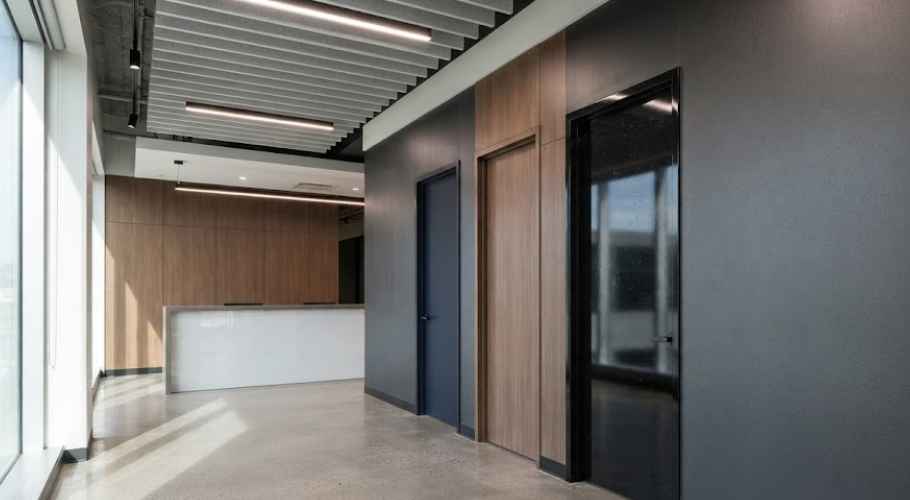
- Wood, metal, stone, and fabric-look finishes let you change the whole feel without new construction
- Storefront and building wrap options refresh the exterior without new materials
- Wrapped surfaces hold up to daily foot traffic and cleaning better than paint
These are the finishes that let a store change its whole feel over a weekend instead of a demolition schedule.
Schedule Work Around Your Slowest Hours
Timing the work matters just as much as picking the right materials. Most retail spaces have a slow stretch, whether that’s early morning, a weekday, or overnight, and that window is where renovation work should happen.
Crews that specialize in commercial spaces are used to working around business hours instead of during them. That might mean starting after closing and finishing before the store opens the next morning, or working in a roped off section while the rest of the floor stays open to shoppers. Either way, the goal is the same. Customers walk in the next day and just see a finished space.
| Feature | Matte | Satin | Gloss |
|---|---|---|---|
| Shine level | None, flat and non-reflective | Soft, gentle sheen | High, mirror-like reflection |
| Best for | Minimal, understated spaces | Most office settings, all-round use | Accent surfaces, small feature areas |
| Fingerprint visibility | Low | Low to moderate | High |
| Hides surface imperfections | Yes, hides dents and scuffs well | Yes, moderately well | No, tends to highlight imperfections |
| Maintenance needs | Low, but harder to spot-clean | Low, wipes down easily | High, needs frequent cleaning |
| Lighting compatibility | Works best in soft or natural light | Works well under most lighting | Can glare under bright overhead light |
| Overall impression | Calm, understated, modern | Polished, balanced, versatile | Bold, sleek, high impact |
What to Communicate to Staff and Customers
Even a renovation with zero downtime benefits from a little communication. Customers notice change, and a heads up goes a long way toward keeping things smooth.
- Let staff know which zones are being worked on and when
- Put up a small sign if any area is temporarily roped off
- Tell regular customers ahead of time if you have a mailing list or social page
- Keep walkways clear even during overnight work so morning setup is simple
- Set expectations that the store stays open the entire time
This kind of communication is short and simple, but it prevents confusion and keeps trust high with the people who shop with you regularly.
Common Mistakes Store Owners Make During a Refresh
The biggest mistake is trying to do everything at once instead of prioritizing. Owners often want new floors, new walls, new fixtures, and a new sign all in the same month, which almost always means longer closures and bigger budgets than planned.
Another common mistake is picking materials based on price alone without checking fire rating requirements for commercial spaces. A cheap material that needs replacing again in two years costs more over time than a durable one that lasts. It also helps to look at a contractor’s real project portfolio, since finished work tells you more than a sales pitch does.
Budgeting for a No-Downtime Renovation
A lot of store owners assume a phased, no-closure renovation costs more than a traditional one. That’s usually backwards. Traditional construction comes with demolition costs, disposal fees, and permit delays that stack up fast. Resurfacing skips most of that since it works with the surfaces you already have instead of tearing them out.
The other budget line owners forget is lost revenue during closure, which can be harder to calculate but often outweighs the actual renovation cost. When you factor in the sales that keep coming in because the store never shuts its doors, a zone based, no-downtime approach usually ends up costing less overall, on top of being far less disruptive.
Keeping Your Doors Open While Your Store Gets a New Look
A store update doesn’t have to mean a closed sign and a week of lost sales. With the right materials, the right schedule, and a plan broken into manageable zones, a retail space can look brand new by the time customers walk in the next morning. If you’re ready to talk through what an update could look like for your store, reach out and start the conversation.