Commercial renovation rarely goes the way you plan. Budgets go sideways. Timelines stretch. Guests complain. Staff struggle to get work done with workers around every corner. If you’ve managed a facility through a full renovation before, this probably sounds familiar. And even with good planning, things tend to go wrong somewhere.
Architectural vinyl film wrapping works differently. Instead of ripping out surfaces and starting from zero, you apply high-grade vinyl film directly over what’s already there. Hotels, hospitals, retail stores, and corporate offices have been using this approach for years. It keeps growing because it fixes a lot of the problems that traditional renovation creates. Here are five of the biggest ones.
Problem 1: Renovation Costs Grow Fast and Go Over Budget
Why the Bill Always Ends Up Higher Than Expected
Cost overruns are one of the most common renovation complaints. You get a quote, approve the budget, and then a few weeks in, the number starts climbing. Hidden damage behind walls. Extra labor hours. Materials that take longer to source. One change order turns into three. By the end, the final bill can be double the original estimate.
Vinyl film wrapping skips most of what drives those extra costs. There’s no demolition. Surfaces stay in place. Installation is fast, which means less labor time overall. The difference shows up most clearly when you look at something like commercial door wraps compared to full door replacement:
| Solution | Typical Cost | Install Time |
|---|---|---|
| Architectural Vinyl Wrap | $350 to $600 per door | About 30 minutes per door |
| Full Door Replacement | $800 to $2,000+ per door | Several hours to days |
That gap adds up fast. And it’s not just doors. The same cost savings show up when you’re resurfacing:
- Walls and wall panels instead of full drywall replacement
- Elevator cabs and landings instead of pulling out metal panels
- Casework and millwork instead of ripping out cabinets and built-ins
- Storefronts and building exteriors instead of full structural updates
For a hotel updating 200 room doors, wrapping instead of replacing can save over $200,000 on that one task alone. Actual projects confirm it. At Faro Blanco in the Florida Keys, resurfacing 250 doors with architectural vinyl saved the property roughly $250,000 in renovation costs.
Problem 2: Dust, Fumes, and Mess Shut Down Active Spaces
Traditional renovation is a dirty process. Sanding creates dust that coats everything nearby. Paint fumes take days to clear out, especially in enclosed spaces like hotel corridors or hospital wings. Entire sections of a building often need to be closed off while workers move around with equipment, ladders, and materials.
For a hotel, that means rooms out of service. For a hospital or clinic, it can mean shuffling patients and staff. For a retail store, it means customers walking past a construction zone instead of a finished space. The mess itself isn’t just annoying. It costs money in lost business and extra cleaning.
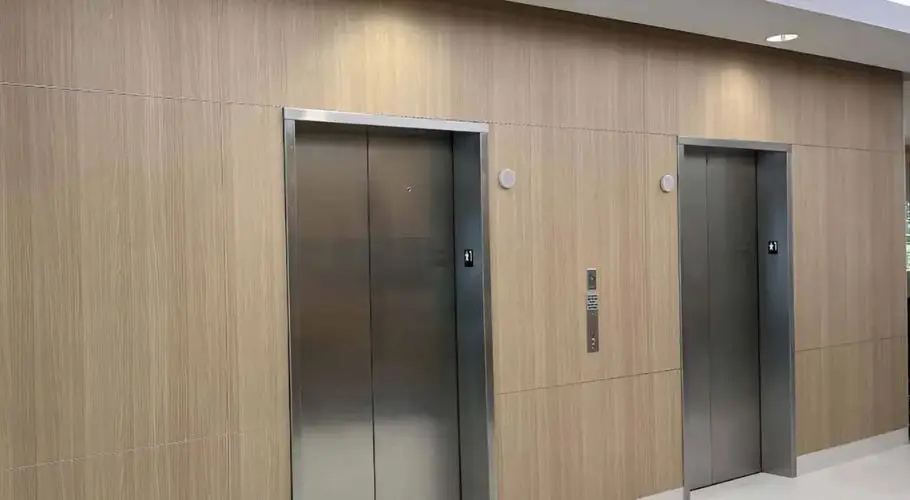
Vinyl film wrapping is a much cleaner process. There’s no sanding involved. No paint. No chemical odors. The film applies directly to the existing surface with minimal noise and almost no mess. A wall surface wrap or door update can usually be done while the rest of the floor stays open. That’s why properties like Four Seasons locations were able to have 90 elevator landings resurfaced without taking the hotels offline at any point during the project. The work happens around operations, not instead of them.
Problem 3: Projects Run Way Longer Than the Original Timeline
How Vinyl Film Wrapping Keeps Renovation on Schedule
Construction delays are almost expected at this point. One trade waits on another to finish. Materials get backordered. Exterior work gets rained out. A two-week project turns into six, sometimes eight. And every extra week costs money and patience.
Vinyl film installation runs on a very different schedule. Here’s what makes it faster:
- No removal needed: The film goes over existing surfaces. No teardown, no disposal.
- Doors stay on their hinges: Each door takes about 30 minutes to wrap, so a whole floor of hotel doors can be done in a single day.
- Elevator interior wrapping is far quicker: than replacing metal cab panels, which requires taking the elevator out of service for extended periods.
- No curing time: Unlike paint or adhesives that need to dry, vinyl film is ready to use almost immediately after installation.
- Work can move through a building in phases: Floor by floor, room by room. The rest of the space keeps running.
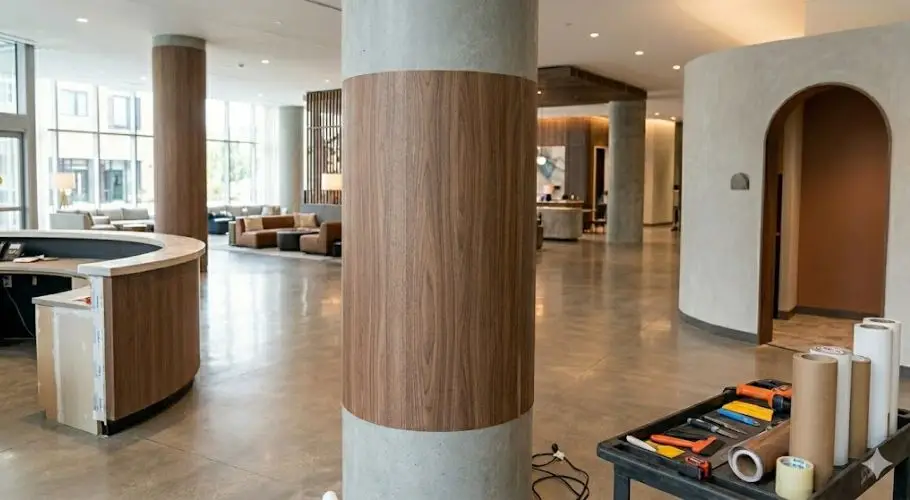
At DHL headquarters in South Florida, Resurface Wraps transformed lobby walls, panels, columns, and elevators with zero downtime for the facility. A full traditional renovation would not have allowed that.
Problem 4: Getting the Right Look Is Harder and More Expensive Than It Should Be
Design flexibility sounds easy on paper. In practice, it’s one of the trickier parts of commercial renovation. Matching textures across dozens of surfaces is hard when you’re working with natural materials. Real wood panels cut from the same tree can still look different from one another. Natural stone is heavy, expensive, and difficult to install uniformly. Custom finishes with real materials cost more, take longer, and still don’t always deliver the consistent result you’re after.
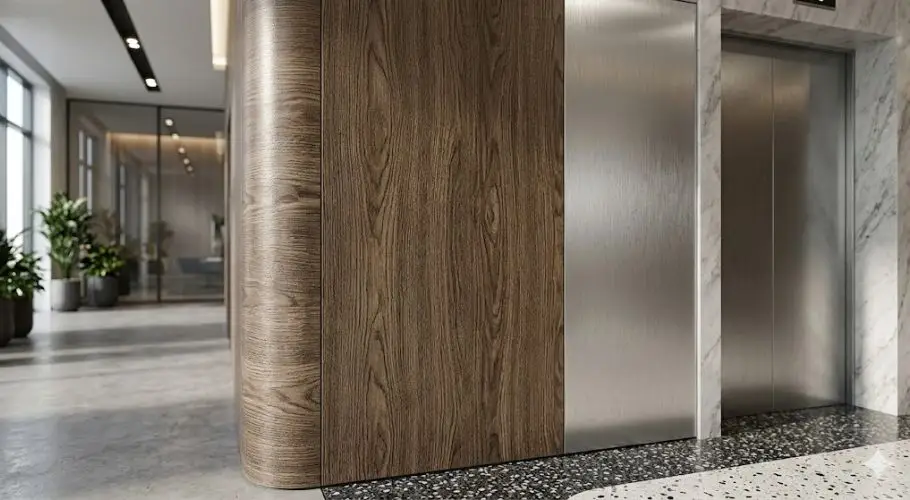
Vinyl film wrapping gives you a much wider range of design options for a lot less money. The full library of available finishes covers wood grain, brushed metal, concrete textures, marble, solid colors, stone looks, and abstract patterns. Because the film is manufactured, the color and texture stay consistent from panel to panel, whether you’re doing 10 surfaces or 100. Swarovski used architectural vinyl wrapping to shift the interior of five store locations from white to pink as part of a rebrand. The whole job was done overnight, without closing a single store. Doing that through traditional renovation would have taken months and cost far more. You can see more examples of this kind of work in the project portfolio.
Problem 5: Surfaces Wear Out and Become a Maintenance Headache
Why High-Traffic Spaces Need Something More Durable Than Paint
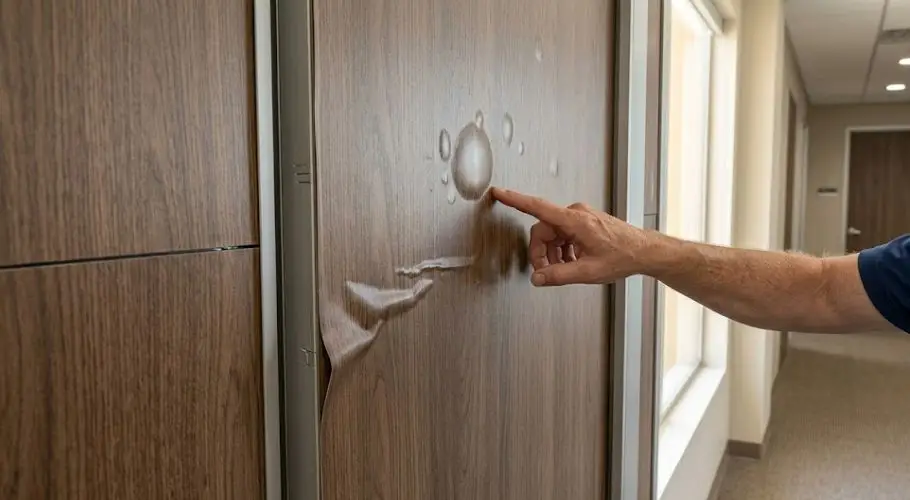
Paint chips. Laminate bubbles and peels. Doors in a busy hotel corridor start looking worn within a year or two of a repaint. And every time a surface needs to be touched up, it costs labor time and pulls staff away from other tasks. In healthcare and hospitality settings, keeping surfaces looking clean and intact isn’t optional.
Architectural vinyl film holds up well in daily use. Here’s what makes it practical for high-traffic commercial spaces:
- Abrasion resistant: Everyday scuffs and light scratches don’t penetrate the film the way they would bare wood or painted surfaces.
- Fire rated for commercial use: Films used in professional installations are Class A fire rated and UL 10B/10C certified. They’re code compliant for use on interior surfaces including fire-rated doors.
- Easy to clean: Standard cleaning products work fine. No special maintenance routine needed.
- Anti-fingerprint coating on many finishes: This matters a lot in elevator cabs, reception areas, and anywhere people are constantly touching surfaces.
- Long lifespan: Expected performance life for indoor applications is 12 to 15 years, with most products backed by a manufacturer warranty.
- Spot repair is possible: If one section gets damaged, you replace that section. You don’t have to redo the whole surface.
This is one of the reasons casework and millwork wrapping has become common in retail and healthcare settings. The surfaces need to look sharp every single day, and vinyl film is a far easier way to keep that standard than repainting every year or two.
So Is Vinyl Film Wrapping Worth It for Your Space?
The five problems above show up in almost every commercial renovation project to some degree. Cost overruns, construction mess, long timelines, design limitations, and surface wear are not rare exceptions. They’re regular parts of the process when you’re working with traditional methods.
Vinyl film wrapping doesn’t fix everything. But it does deal with these five problems directly, and it’s been used across hotels, healthcare facilities, retail chains, and corporate offices long enough that the results are well documented. You can browse the full range of applications on the Resurface Wraps site to see what surfaces this works on.
If you’re planning a renovation and want to know whether surface wrapping makes sense for your specific project, reach out to the Resurface Wraps team for a project consultation and quote.
Frequently Asked Questions
How long does architectural vinyl film last in a commercial space?
Most films used in professional installations last between 12 and 15 years for interior applications. Manufacturer warranties typically cover around 5 years, though proper installation and normal care usually means the film goes well past that.
Can vinyl film be applied over any type of existing surface?
It works on most common interior surfaces, including wood, laminate, metal, glass, and drywall. Surface condition matters though. A professional installer will look over the surface before applying the film to make sure it’s clean and smooth enough to hold it properly.