If you are planning a renovation for a commercial building, you have probably looked at architectural film and laminate. Both can change how a space looks. But they are very different materials. Choosing the wrong one can cause problems that go beyond the finished surface.
Here is a simple breakdown of what each material is, where it works well, and how the two compare in real commercial settings.
What Is Architectural Film?
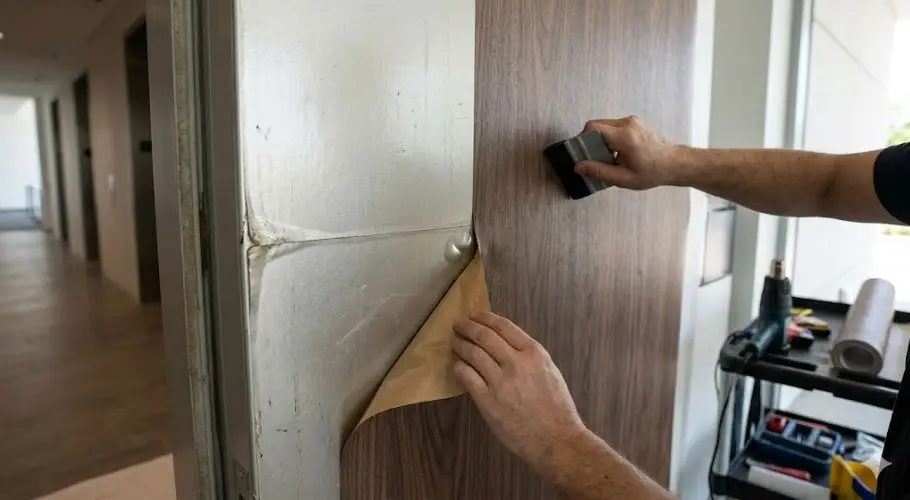
Architectural film, also called vinyl wrap or architectural vinyl, is a flexible, self-adhesive sheet made from high-grade PVC. It goes straight onto an existing surface without removing or rebuilding anything underneath. The surface below stays in place. The film sticks to it.
The material comes in a wide range of finishes, from wood grain and stone to brushed metal, fabric textures, and solid colours. Good quality films are not just flat prints. They have physical texture built into the surface, so you can feel it, not just see it. Many architectural films also carry fire ratings, which is a real requirement in hotels, hospitals, and office buildings that must meet commercial building codes.
What Is Laminate?
Laminate is a hard sheet made by pressing layers of paper and resin together under heat. It has been used in commercial interiors for decades. You have probably seen it on kitchen counters, office furniture, or retail shelving. It comes in two main types.
High Pressure Laminate (HPL) is the stronger of the two. It handles impact, heat, and scratches reasonably well. Low Pressure Laminate (LPL) is thinner and used for lighter jobs like cabinet doors. Both have to be cut to size and glued to a base material, usually MDF or plywood, before they are installed. That work happens in a shop or as part of a full renovation, not on-site over existing surfaces
How They Compare
Here is how the two materials stack up across the things that matter most in a commercial project.
| Feature | Architectural Film | Laminate |
|---|---|---|
| Installation method | Applied over existing surfaces on-site | Cut and bonded during manufacturing or full renovation |
| Installation time | Hours per surface | Days to weeks per project |
| Flexibility | Wraps curves, edges, and 3D shapes | Rigid sheet, cannot bend |
| Design options | Hundreds of textures and finishes | Good variety but limited by sheet formats |
| Fire compliance | Many films meet Class A or commercial-grade fire ratings | Varies; often needs extra treatment |
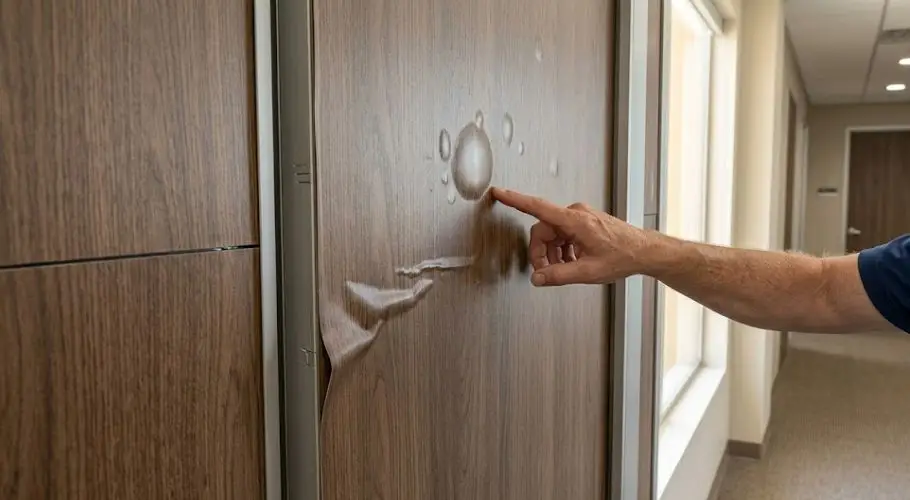
| Repairability | Damaged sections can be rewrapped on their own | Usually requires full panel replacement |
| Business disruption | Minimal. Can be installed in occupied spaces | High. Often requires closures or shutdowns |
| Weight | Lightweight | Heavier, adds load to the surface |
| Sustainability | Resurfaces existing material, cuts down on waste | Replacement generates a lot of material waste |
| Cost | Lower overall for renovations and refurbishments | Higher due to building and site preparation |
How Installation Works in a Real Building
Laminate sounds familiar and solid. That can make it seem like the safer choice. But in an occupied commercial building, the installation process creates real problems.
Laminate work means cutting panels to size, preparing base materials, and shutting down the area being worked on. That could mean closing a hotel floor, blocking off a hospital corridor, or pulling staff out of an office wing for days. That disruption adds cost that does not always show up on a quote. Architectural film goes on over what is already there. A commercial door wrap can be done in hours. An entire elevator interior can often be finished overnight. For buildings that need to stay open during a project, that difference is what makes certain renovations possible at all.
Which One Lasts Longer?
Many people assume laminate wins on durability because it is hard and has been around for a long time. That is not always the case.
Commercial-grade architectural film is built for heavy use. It holds up against moisture, cleaning chemicals, UV exposure, and impact. Many manufacturers offer warranties of 10 years or more. Laminate is strong, but it chips and cracks at edges and corners, which is exactly where it takes the most wear in a busy space. When a laminate panel chips, you usually have to replace the whole thing. With film, you can rewrap just the damaged section without touching anything around it. In a busy corridor or a high-traffic elevator interior, being able to fix one section at a time saves money and keeps things looking clean.
Design Options for Commercial Spaces
The look of a lobby, a corridor, or a reception area says something about the business inside. Both materials offer design choices, but not the same ones.
Laminate:
- Available in solid colors, wood effects, and some textures
- Pattern and color are built into the sheet for consistency
- Limited to flat surfaces and straight edges
- Cannot go around columns, curved panels, or detailed millwork
Architectural Film:
- Hundreds of finishes including wood, stone, metal, leather, fabric, and abstract patterns
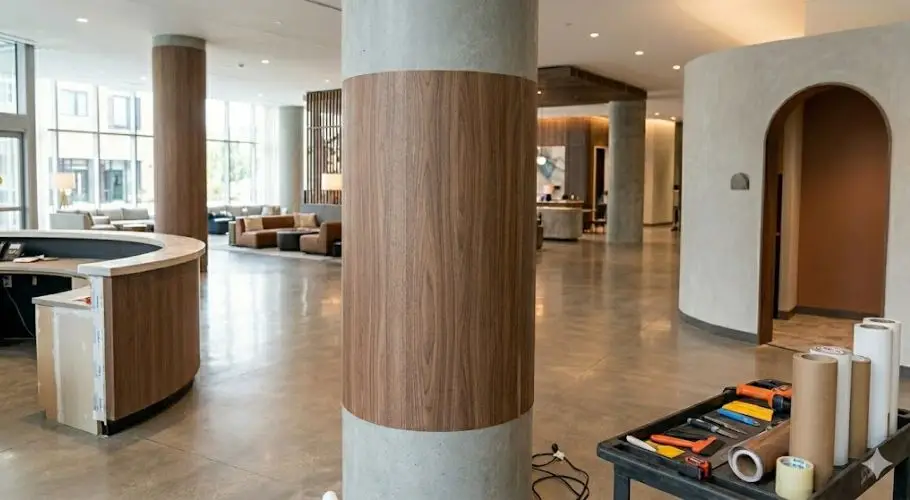
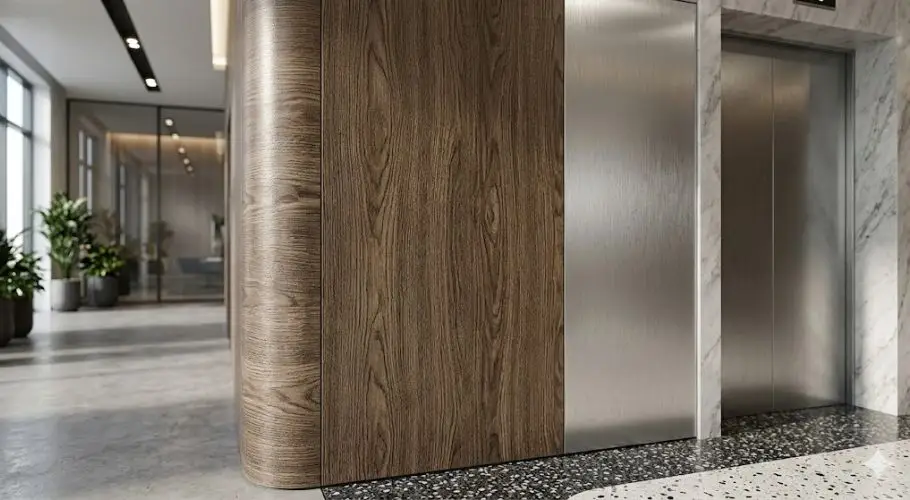
- Flexible enough to go around curves, rounded corners, columns, and 3D shapes
- Can cover wall surfaces, doors, ceilings, elevator panels, casework, and storefronts
- Embossed finishes feel like the actual material, not just a flat print
For corporate offices or hospitality properties where a finish needs to run across different surface types, film handles that better.
Fire Ratings and Commercial Code Compliance
Commercial buildings have fire safety rules that go well beyond what applies in homes. Hotels, hospitals, airports, schools, and offices all operate under codes that cover what materials can go on walls, ceilings, and other interior surfaces.
Many architectural films are tested and certified to meet commercial-grade fire standards. In the US, Class A fire ratings under ASTM E84 are commonly required for occupied commercial spaces. Resurface Wraps selects products that line up with commercial code requirements, and you can check fire rating details on their resources page. Standard laminate panels often do not carry those ratings without extra treatment, which adds time and cost to a project.
Where Architectural Film Gets Used in Commercial Buildings
Film gets applied to more surface types than most people expect going into a commercial project. Here is where it comes up most often.
- Doors: Resurfacing hollow-core or steel doors rather than replacing them. Door wraps are one of the most common applications across hotels, offices, and healthcare facilities.
- Elevator interiors and landings: Constant foot traffic makes these surfaces wear fast. Elevator wraps and elevator landing wraps hold up well under daily use.
- Wall panels and feature walls: Updating dated finishes or adding texture to wall surfaces without replastering or repainting.
- Casework and millwork: Reception desks, built-in cabinetry, retail fixtures, and custom joinery through casework and millwork wraps.
- Ceilings: Ceiling wraps that add texture or metallic finishes to plain overhead surfaces.
- Storefronts and exterior columns: Storefront and building wraps for exterior surfaces that handle weather and UV exposure.
Comparing the Costs
Cost comparisons depend on the type of project. For a new build where everything is being made from scratch, laminate can hold its own on price. For most renovation work in occupied commercial buildings, the numbers look different.
A laminate renovation means demo work, material disposal, base preparation, fabrication, and installation. All of that adds time and labour. Architectural film cuts out most of those steps. You prepare the existing surface, apply the film, and the job is done. No waste removal, no structural rebuild, and in most cases, no need to close the space. When you add up avoided downtime, lower labour hours, and the ability to phase the work floor by floor, film often ends up noticeably cheaper on the final invoice.
Which One Fits a Commercial Building?
For renovation work in an occupied commercial building, architectural film handles most situations better. It goes on faster, causes less disruption, covers more surface types, is easier to patch, meets fire code requirements, and tends to cost less once you add everything up.
Laminate makes sense in new builds where everything is going in from scratch. In renovation work, especially where the building stays open during the process, it tends to ask too much of the schedule and the budget.
What It Usually Comes Down To
The decision mostly depends on the building situation. Can the space be closed during work? Is there a budget for full demo and rebuild? Or does the renovation need to happen without disrupting tenants, guests, or daily operations?
Resurface Wraps works with corporate offices, hotels, healthcare facilities, retail spaces, and institutional buildings across North America. The range of finishes available covers wood, metal, stone, solid colors, fabric, and abstract textures, so finding something that fits a specific design direction is usually not the problem. If you want to see how similar buildings have handled surface updates, the project gallery shows a good range of completed work.
Talk to the Resurface Wraps team about your building and get a proper look at what your surfaces actually need.