Pop-up retail moves fast. Brands set up at malls, trade shows, street markets, and festivals for a few days or a few weeks, then pack up and leave. The timeline is short. The budget is tighter than a permanent store. But the space still needs to look good, or people just walk past.
That’s the problem most pop-up operators run into. They can’t paint. They can’t renovate. They’re working with whatever the venue gives them, usually plain walls, generic doors, and surfaces that were not designed with their brand in mind. Vinyl wraps solve that without causing any damage or running up a big bill.
A Film, Not a Sticker
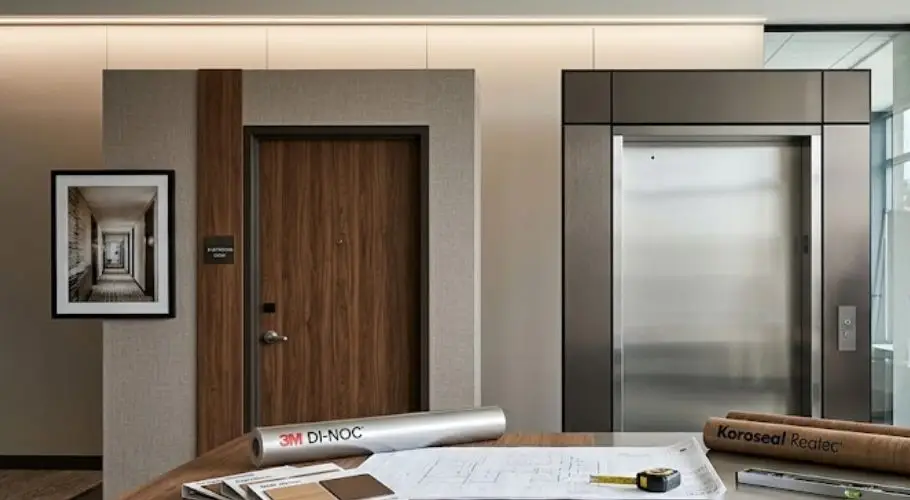
A lot of people hear “vinyl wrap” and picture a large sticker. That’s not what architectural vinyl film is. The films used in commercial spaces, brands like 3M DI-NOC, LG Benif, Belbien, and Reatec, are pressure-sensitive surface films with a self-adhesive backing. They go on smooth surfaces like walls, doors, columns, and counters and change the entire look of that surface.
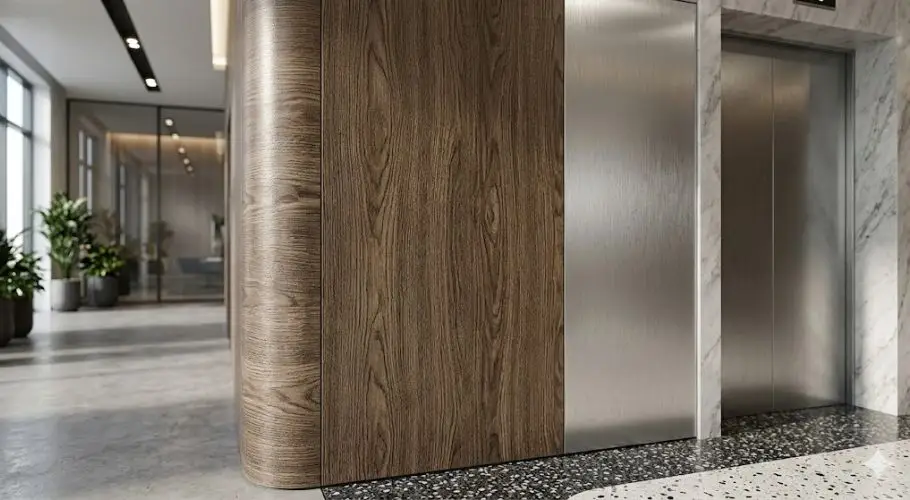
The finishes are not flat printed graphics. They replicate the texture and appearance of real materials. Wood grain that has depth to it. Stone that looks heavy even though it weighs nothing. Brushed metal without any actual metal. These films are fire-rated, abrasion-resistant, and built for environments where people are moving through all day. A certified installer applies them directly over existing surfaces with no demolition, no permits, and very little downtime. That’s a real difference from what most people picture when they think of a wrap.
Why Pop-Up Spaces Are Harder Than They Look
Running a pop-up is not the same as opening a regular store. You’re renting a space someone else owns. You often sign a short lease, sometimes just a few days, sometimes a month. The landlord or venue coordinator usually has rules. No painting. No drilling through walls. No changes to the storefront exterior without approval.
So you’re stuck with what you get. And what you usually get is a blank box with fluorescent lighting and scuffed surfaces. That is a hard starting point for any brand trying to make a real impression. Pop-up shoppers decide whether to walk in within a few seconds of passing the entrance. If the space looks bare or unfinished, most of them keep going. The visual experience of the space does real work, especially when there’s no established reputation or foot traffic coming from repeat customers.
Key Benefits of Vinyl Wraps for Pop-Up Spaces
1. Installation Takes Hours, Not Days
There is no drying time with vinyl wraps. No fumes. No waiting for anything to cure. An installer comes in, preps the surfaces, and applies the film. A door takes around 30 minutes. A wall or a set of columns can take a few hours. A small pop-up space with multiple surfaces can usually be done in a single day.
That matters a lot when your setup window is a weekend and your pop-up opens Monday morning.
2. The Surface Underneath Stays Untouched
Architectural vinyl wraps go over existing surfaces and come off without damage. When your lease ends, the installer removes the film and the wall, door, or counter underneath is exactly as it was. No scraping. No repainting. No security deposit disputes with the venue.
This is one reason venue managers and property owners have no issue with wraps. There’s nothing to fix afterward.
3. Over 1,000 Finish Options
The range is genuinely wide. Wood grains, stone textures, metallic finishes, solid mattes, high gloss, concrete looks, leather effects. Brands like 3M DI-NOC, Belbien, LG Benif, and Reatec each carry hundreds of options. Put them together and you’re looking at more than 1,000 choices.
That means a jewelry brand, a streetwear label, and a plant-based food company can all use vinyl wraps and end up with completely different looks. The material adapts to the brand, not the other way around.
4. Costs Less Than Any Other Renovation Option
Hiring contractors, buying new materials, replacing surfaces, it adds up fast. And it makes no sense for a space you’re using for two weeks. Vinyl wraps cost a fraction of what a renovation costs and they deliver a result that looks just as considered.
Door replacement can run into thousands of dollars per door. A door wrap covers the same door in about 30 minutes at a much lower cost and the door still looks completely different when it’s done.
5. Looks Like It Was Designed That Way
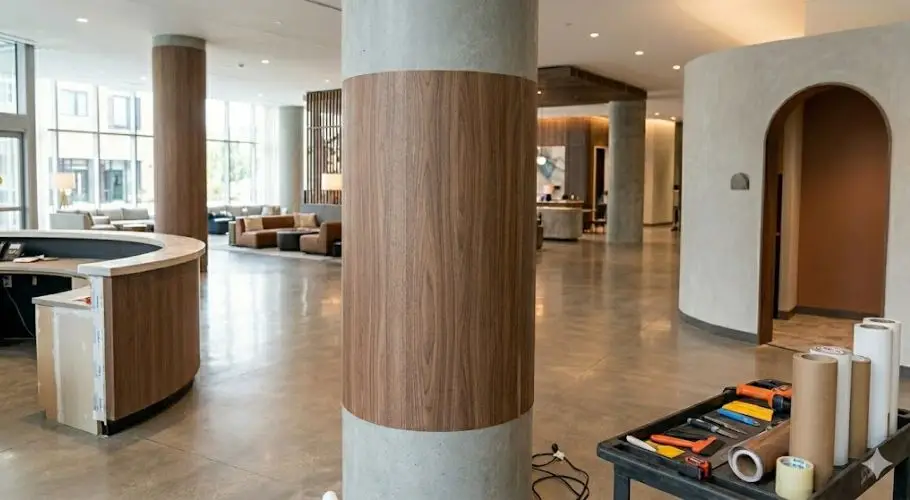
A wrapped column or wall does not look like a temporary fix. When the film is applied by a certified installer with clean seams and proper surface prep, the result reads as a deliberate design choice. A wall with a concrete-textured film looks like a concrete wall. A counter wrapped in dark wood grain looks like it was built that way.
That’s the kind of thing that stops people at the entrance and brings them in.
6. Goes on Multiple Surfaces in One Space
Pop-up retail works best when the whole space feels put together. A storefront wrap on the entry panels sets the tone before anyone steps inside. Wall wraps carry the look through the interior. Wrapped counters and casework tie everything together.
You can do the whole space in one installation visit instead of coordinating different contractors for different surfaces.
Vinyl Wraps vs. Other Pop-Up Setup Options
| Feature | Vinyl Wraps | Paint | Temporary Decals | Full Renovation |
|---|---|---|---|---|
| Installation Time | Hours | 1–3 days + drying | Hours | Days to weeks |
| Removable Without Damage | Yes | No | Partially | No |
| Finish Quality | Realistic, textured | Flat or glossy | Printed graphic | High |
| Cost | Low to moderate | Low | Very low | Very high |
| Finish Variety | 1,000+ options | Limited colors | Print only | Unlimited but slow |
| Works for Short-Term Leases | Yes | Not ideal | Partially | No |
| Permits Required | No | Sometimes | No | Usually yes |
Surfaces You Can Wrap in a Pop-Up Store
Architectural vinyl films work on smooth, non-porous surfaces. In a retail space, that covers quite a lot:
- Walls and panels – Backdrop for displays or a textured feature section
- Entry doors – Door wraps change the whole feel of the entrance
- Columns – Stone or metallic finishes on columns make a space feel more substantial
- Counters and built-ins – Clean, sharp finishes on casework and millwork
- Storefront frames and panels – The exterior face of the pop-up is the first thing anyone sees
Compatible surfaces include aluminum, stainless steel, gypsum board, glass, and finished wood. Most commercial interiors have at least a few of these.
Fire Ratings and Building Codes
This part matters more than most people realize. Not every vinyl product on the market is fire-rated. If you’re setting up in a commercial building, a shopping center, or a trade show venue, the materials you use on walls and doors may need to meet specific safety codes.
The films that Resurface Wraps installs, 3M DI-NOC, LG Benif, Belbien, and Reatec, are all fire-rated for commercial interior use. They’re code compliant. And the installation itself does not require a permit, which removes one more thing from your setup checklist.
If someone quotes you a very low price on a wrap job, ask about the material brand and whether it’s fire-rated. Off-brand films may not be compliant, and that can create problems with venue management or building inspectors.
How Long Do Wraps Actually Last?
Interior architectural vinyl is rated for up to 12 years of use. For a pop-up that runs a couple of weeks, that durability means you won’t see any peeling, bubbling, or fading during your run. The film holds up through foot traffic, cleaning, and the general busyness of a retail event.
For brands that run multiple pop-ups over a year, some wrapped panels or portable display elements can sometimes be reused at the next location. That’s not always possible depending on how the surfaces are configured, but it’s worth asking about when you plan the first installation.
Matching the Wrap to Your Brand
Finish choice is worth spending some time on. The wrong texture can look off even if the installation is perfect. Here’s a rough guide based on brand type:
| Brand Type | Finish Direction |
|---|---|
| Luxury or fashion | Dark wood grain, marble, warm metallics |
| Tech or modern | Brushed steel, matte black |
| Natural or organic | Light wood, soft stone, warm neutral tones |
| Bold or youth-focused | High gloss, saturated solid colors |
| Minimal or editorial | Clean white, light grey, linen-style textures |
There are over 1,000 finishes across the brands Resurface Wraps works with, so the options go well beyond these categories.
What the Installation Day Looks Like
An installer arrives, checks the surfaces, cleans them, and starts applying the film. There’s no heavy equipment. No loud noise. No dust or debris. The workspace stays clean throughout. For a small pop-up with a few walls and a door or two, the job is typically done in a few hours. Larger setups with multiple surfaces across an entire storefront might take a full day. Either way, the space is usable as soon as installation is done. No waiting.
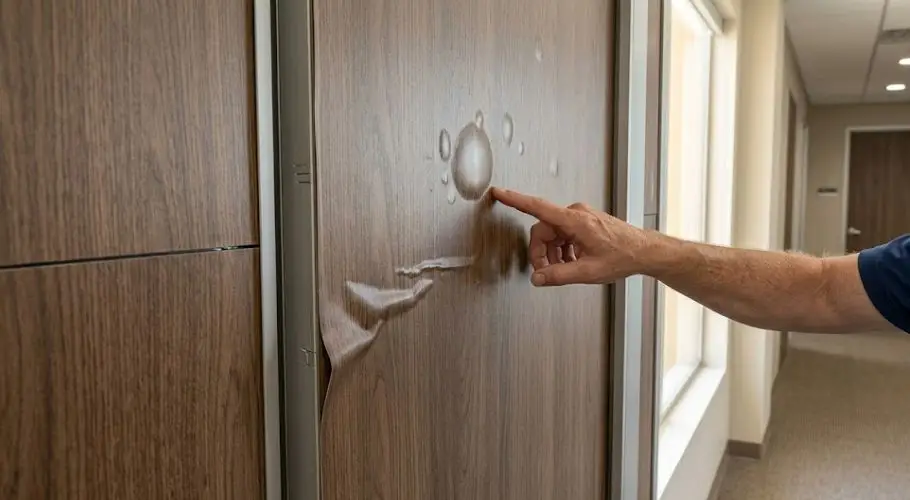
The quality of the result depends heavily on the installer. Bubbles, raised edges, and visible seams come from poor prep or inexperience. Certified installers under the 3M DI-NOC endorsed installer program follow a specific application process that avoids those problems. It’s worth checking credentials before you book anyone.
Before You Book: A Quick Checklist
- Measure the surfaces you want to cover (walls, doors, columns, counters)
- Pick a finish direction that fits your brand
- Confirm the installer is certified and using fire-rated materials
- Make sure the installation can be done within your setup window
- Ask about clean removal at the end of your lease
- Ask if any wrapped elements can be reused at future pop-ups
The Short Version: Does It Make Sense for Your Next Setup?
Pop-up retail does not give you much room for error. The space has to work quickly, look right, and come apart cleanly when the run is done. Vinyl wraps fit that model better than paint, decals, or any kind of real renovation.
They go up fast. They come down without damage. They look like a considered design choice, not a temporary fix. And for brands that do this more than once a year, having a wrap setup dialed in means each new location goes smoother than the last.
If you’re planning a pop-up in Miami, South Florida, or any other city across the U.S., Resurface Wraps handles the installation from start to finish. One point of contact, certified installers, and materials that are fire-rated and ready for any commercial venue.