Lobbies, elevators, and storefront entries take a beating every single day. Hundreds of people pass through, push doors open, lean against walls, and roll carts past corners without thinking twice. Over time, even a well-built space starts to look tired. A vinyl wrap finish built for that kind of wear is usually the fix property owners and facility managers reach for first.
Looks matter, but in a high-traffic commercial space the finish also has to survive scuffs, spills, and people touching it all day, and it still needs to look sharp for guests, tenants, or customers. Here is a look at which architectural vinyl wrap finishes hold up best in busy commercial settings and where each one fits.
Why the Finish You Pick Affects How Long It Lasts
Not every vinyl finish is built the same way. Some films are made mainly for visual impact and work fine on surfaces that get touched once in a while, like a feature wall in a quiet office. Others are made to take repeated contact, friction, and harsh cleaning chemicals without breaking down.
In a busy lobby or a hospital corridor, the wrong choice shows up fast. A finish that looks great on day one can start peeling at the edges or losing its sheen within months if it was never meant for that level of wear. Choosing a finish rated for commercial traffic from the start saves money down the line, and saves you from doing the same job twice.
What a High-Traffic Finish Needs to Survive
A few qualities separate a durable commercial wrap from a basic one. Look for a finish with:
- Abrasion resistance, so the surface does not scuff or scratch under daily contact
- A protective topcoat that resists fingerprints, grease, and general grime
- A Class A fire rating, which most commercial buildings require by code
- A working thickness built for stretch and durability, usually around 12 mils for architectural film
- Easy cleaning with standard commercial cleaning products
- Resistance to fading near windows, doors, and storefronts that get direct sunlight
Films from manufacturers like 3M DI-NOC, Koroseal Reatec, Belbien, and LX Hausys Benif are built around these standards, which is a big part of why they show up so often in hotels, hospitals, and office towers.
Which Industries Deal with the Heaviest Traffic
Some industries simply see more foot traffic than others, and that changes how big a deal the finish choice really is. Hotels and resorts run elevators and lobbies around the clock, while a small private office might only see light use during business hours.
Hospitality properties usually need the most durable finishes throughout their common areas, since guests judge a hotel partly on how the building looks and feels. Healthcare facilities face similar demands, with the added pressure of fire rating rules and easy disinfecting. Retail and corporate spaces sit somewhere in the middle, often mixing tougher finishes at entry points with softer options further inside the building.
Vinyl Wrap Finishes That Hold Up in Busy Spaces
Architectural vinyl wraps come in a wide range of looks, from wood and metal to stone and abstract patterns. Some are better suited to heavy traffic than others. Here is how the main finish categories actually perform in a commercial setting.
Wood Grain Finishes
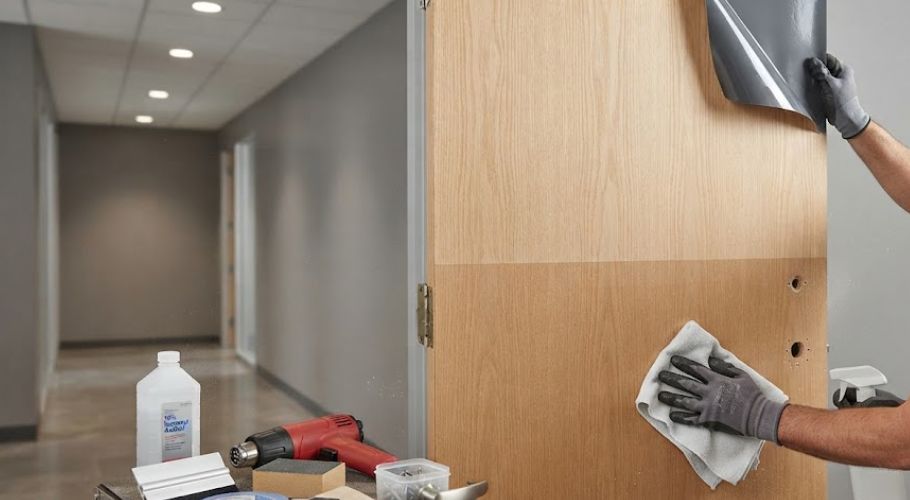
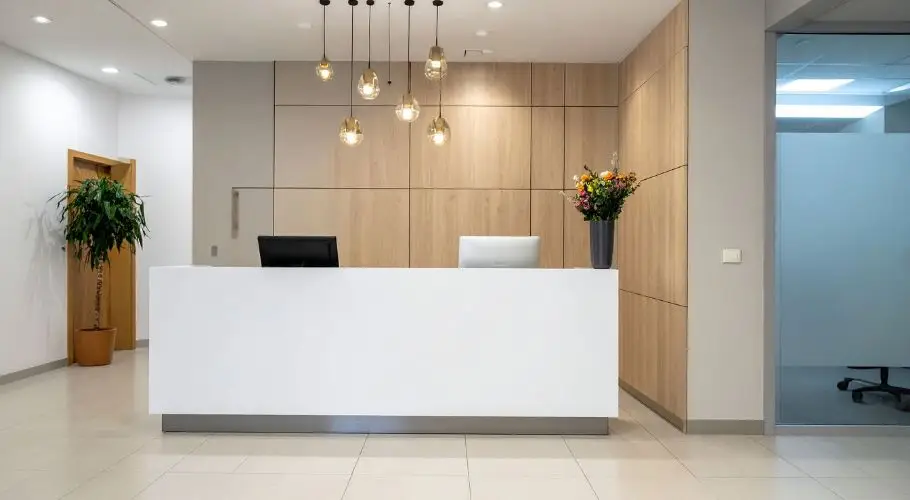
Wood grain film copies the warmth of real wood without the upkeep real wood needs. Door wraps, reception desks, and elevator landings are common spots for it, anywhere a warmer look matters more than a cold, sterile one. The grain texture is a practical bonus too, since it hides small scuffs better than a flat surface would.
Metal Finishes
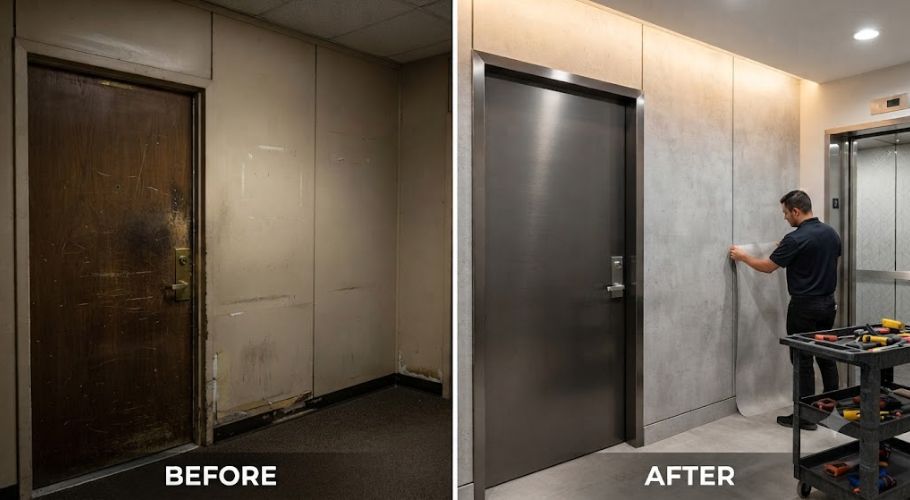
Metal finishes read as sleek and modern, which is why corporate lobbies and retail storefronts lean on them so often. Brushed textures hold up to fingerprints and light scratching better than a polished or mirror finish, since the texture scatters light instead of showing every mark.
Stone Finishes
Hotel lobbies, building entrances, and upscale retail walls reach for stone and marble-look films for a reason. The finish brings a sense of permanence to a space without the weight or cost of real stone, and the polished first impression starts the moment someone walks through the door.
Solid Color Finishes
Solid color finishes are the practical choice when budget matters or a finish needs to match an exact brand palette. Casework and millwork, reception counters, and interior walls all take well to solid film, and keeping the color consistent across a large space is fairly straightforward.
Fabric and Textile Finishes
Fabric-look films do best on surfaces that do not get touched constantly, since deeper textures show wear sooner than a flatter finish would in the busiest zones. Waiting rooms, hotel corridors, and accent walls are where this finish tends to show up, adding texture and softness without taking the kind of daily beating an entrance door does.
Abstract and Pattern Finishes
Abstract and pattern finishes give designers room for a bold statement on a wall wrap in a retail space or hospitality common area. The smarter approach is pairing them with tougher finishes nearby, so a striking accent wall sits next to a metal or stone finish that can actually handle the foot traffic.
Finish Comparison for Commercial Traffic
| Finish Type | Best Suited For | Traffic Tolerance | Maintenance |
|---|---|---|---|
| Wood Grain | Doors, elevator landings, reception areas | High | Wipe clean, low upkeep |
| Metal | Lobbies, storefronts, elevator interiors | High | Wipe clean, resists fingerprints |
| Stone | Entrances, hotel lobbies, retail walls | High | Wipe clean, very durable |
| Solid Color | Casework, millwork, interior walls | High | Easiest to clean and match |
| Fabric/Textile | Waiting rooms, accent walls, corridors | Moderate | Needs gentler cleaning |
| Abstract/Pattern | Accent walls, feature areas | Moderate | Depends on texture depth |
Where These Finishes Get the Most Use
Some areas of a commercial building see far more contact than others, and that should guide where the toughest finishes go first. Entrances, elevators, and shared walkways take the brunt of daily traffic, while private offices or quiet back corridors can handle a wider range of finish types without issue.
It helps to think of a building in zones rather than treating every surface the same. The busiest contact points deserve the most durable finish available, even if that means spending a little more there, while lower traffic areas leave more room to play with softer textures and bolder patterns.
These are the spots that take the most punishment and need the toughest finish:
- Building entrances and storefronts
- Elevator interiors and elevator landings
- Lobby walls and reception desks
- Commercial doors and frames
- Casework and checkout counters in retail spaces
- Corridors connecting common areas in hotels and hospitals
How to Pick the Right Finish for Your Space
A few honest questions can narrow down the right choice before committing to a finish for a renovation:
- How much daily foot traffic does this surface actually see?
- Will the area be cleaned often, and with what kind of products?
- Does the finish need to match an existing brand look or design plan?
- Is the surface near direct sunlight, which can affect fading over time?
- Does the space need a fire rating to meet local building codes?
Walking through these questions before a wall wrap project makes it much easier to land on a finish that looks right on day one and still holds up after a few years of regular use.
A Finish That Earns Its Keep
A finish that looks good for a year and falls apart by year two is not really a good deal, no matter how cheap it was upfront. The finishes that earn their place in a busy commercial space are the ones built to take contact, cleaning, and constant foot traffic without losing their look.
Resurface Wraps installs architectural vinyl films from 3M DI-NOC, Koroseal Reatec, Belbien, and LX Hausys Benif across hotels, offices, hospitals, and retail properties throughout the country. Every film carries a Class A fire rating and goes on with help from trained installers who know which finish fits which kind of traffic. Get in touch with the Resurface Wraps team to talk through which finish makes the most sense for your space.