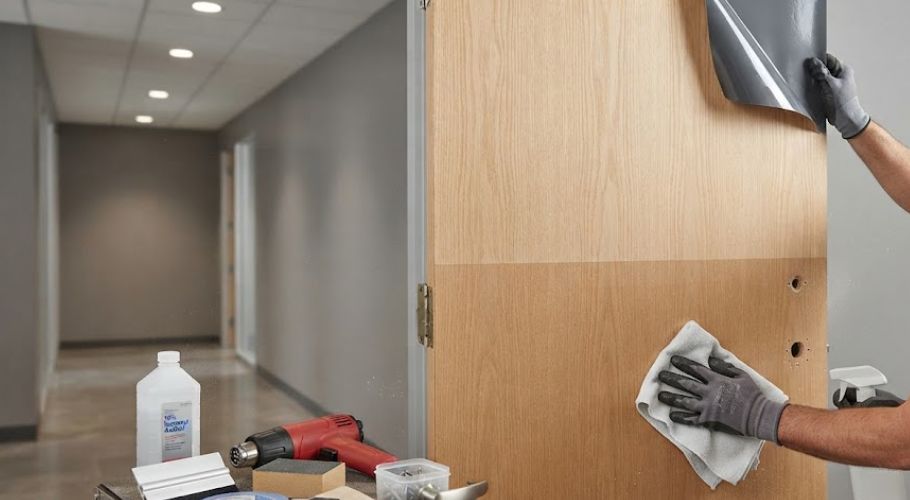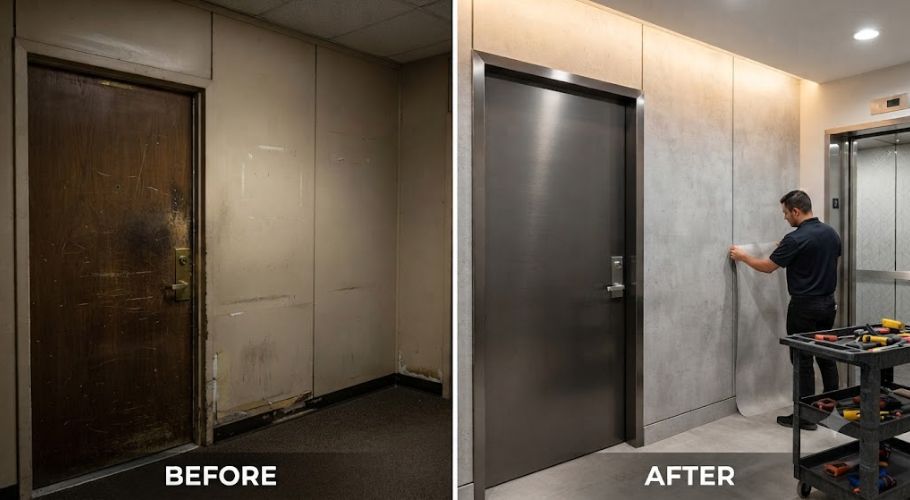
Architectural vinyl film does a lot of heavy lifting in commercial spaces. Hotels, hospitals, offices, and retail stores use it to refresh doors, elevator panels, walls, and millwork without tearing anything out or shutting down operations for days. When the installation is done properly, the result is clean and consistent. Most people walking past a well-wrapped surface have no idea it is not the original material.
But a poor install tells a different story. Some problems are obvious from the first day. Others take a few weeks to show up. Either way, knowing what to look for puts you in a much better position to decide whether something needs to be brought back to your installer.
What a Good Architectural Wrap Should Look Like
A properly installed architectural wrap feels smooth when you run your hand across it. No ridges, no lumps, no sections where the film sits higher than the rest. Edges should lie flat against the surface without any gap between the film and the substrate. Where seams exist, they should fall along natural break lines, not through the middle of a flat panel.
The pattern should also stay consistent across the full surface. If you are looking at a door wrap with a wood grain finish, that grain should flow in the same direction from top to bottom. For wrapped elevator panels, the sheen and color depth should look the same near the floor as it does at eye level. Any variation in texture or finish tone is worth a closer look.
7 Signs of a Poorly Installed Architectural Wrap
1. Air Bubbles Under the Film
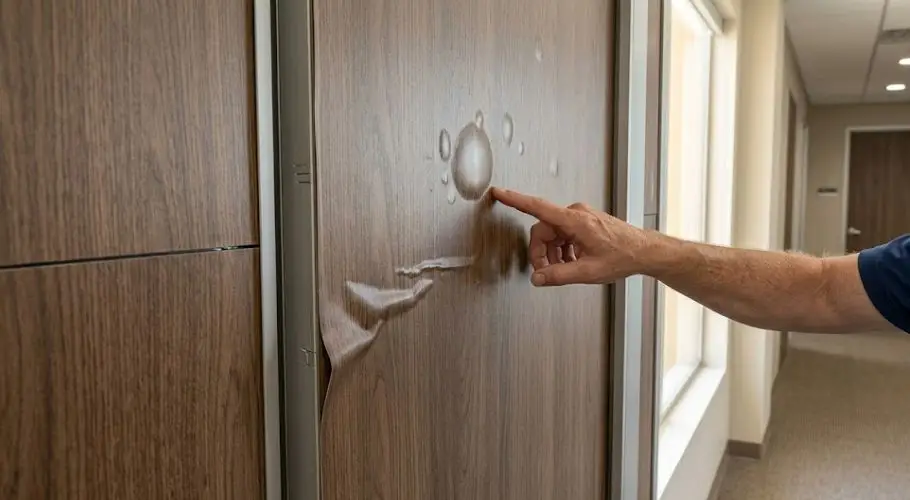
Air bubbles are probably the thing installers get called back for most often. They happen when dust, grease, or moisture is left on the surface before the film goes down, which stops the adhesive from making proper contact. Some bubbles are tiny and easy to miss unless you are right up close. Others are visible from across the room.
A small bubble that appears right after installation might flatten out within 48 to 72 hours as the adhesive settles. If bubbles are still sitting there after three days, or if they cover a noticeable area of a panel, get in touch with your installer.
2. Lifting or Peeling Edges
Edges are where a wrap starts to fail first, especially in high-traffic areas. Check around door frames, panel borders, and any spot where the film wraps around a corner or curve. If the film is curling up or there is a visible gap between the edge and the surface, the finish step was likely skipped or rushed.
Post-heating is what locks the adhesive into edges and curves after the film is applied. Without it, those areas lift over time. On [elevator wraps](https://resurfacewraps.com/elevator-wrap/) and other surfaces that get daily contact, lifting edges tend to spread faster and do more damage if they are not caught early.
3. Wrinkles or Creases
Architectural vinyl should lie completely flat. If you see raised lines or areas where the film looks bunched together, it was not worked properly during application. This often happens when film is forced around a complex shape without the right technique or when too much material is pushed into a tight corner without being trimmed.
Creased areas collect dirt more easily and the film can crack at the fold point over time. Once a crease is in, it cannot be pressed out. That section needs to come off and be reapplied.
4. Seams in the Wrong Places
Using more than one piece of film on a surface is normal. Large panels and complex shapes almost always need multiple pieces. But where those seams are placed matters a lot. A seam running through the center of a flat door panel stands out. Seams should sit inside grooves, along natural panel borders, or at points where they blend with the design.
A thick ridge or a visible gap between two pieces usually means the installer did not plan the layout carefully before starting. On wall wraps, seams in the wrong spots are especially obvious under overhead lighting or natural light that hits the surface at an angle.
5. Rough Texture or Trapped Debris
Run a hand across the wrapped surface. Even a textured finish like wood grain or concrete should feel smooth in terms of how the film sits on the substrate. If you feel small hard spots or bumps under the film, debris was caught during application. Dust particles, paint chips, or fine grit trapped under the film cannot be removed without taking the whole piece off.
This usually means the panel needs a full redo. It also points to the installation not being done in a clean, prepared environment, which is a sign of a rushed job overall.
6. Distorted or Misaligned Patterns
Step back and look at the surface as a whole. On finishes like brushed metal or wood grain, the pattern should look uniform from one side to the other. If the grain shifts direction partway across the surface, or the sheen looks washed out in one section, the film was stretched too far during application.
Overstretching changes how the finish reads and also weakens the adhesive bond in that area. On casework and millwork with tight angles or recessed details, pattern distortion is one of the more telling signs of poor workmanship.
7. Cut Marks on the Underlying Surface
If the installer used a blade directly against the original surface while trimming the film, they may have scored the substrate underneath. This is harder to catch until the wrap is removed, but around corners and panel joints you can sometimes see the edge of a scratch line where the knife went too deep.
A professional installer uses tools and techniques that protect the surface below. Cut marks on the substrate are a sign that the proper method was not followed.
Quick Reference: Wrap Defects at a Glance
| Defect | Likely Cause | What to Do |
|---|---|---|
| Air bubbles | Poor surface prep or trapped moisture | Monitor for 48–72 hours, report if they stay |
| Lifting edges | Post-heating skipped or weak adhesion | Report early, worsens fast if ignored |
| Wrinkles or creases | Improper technique during application | Report, affected area needs replacement |
| Seams in wrong spots | Layout not planned before installation | Request reinstallation of the section |
| Trapped debris under film | Unclean installation environment | Full panel redo usually required |
| Pattern distortion | Film overstretched during application | Get an assessment from a certified installer |
| Scored substrate | Blade used directly on underlying surface | Photograph and report for inspection |
When Is It Time to Ask for a Fix?
Some problems can be handled quickly if they are caught early. A small lifting edge that is still fresh can often be pressed back down with heat before it spreads across the panel. A minor bubble near the border might settle on its own within a few days. But if you are seeing multiple issues at the same time, or the same problem comes back after a repair attempt, the installation likely needs to be properly redone rather than patched.
If the problem affects how the film bonds to the surface, it needs attention. A wrap that is peeling or showing persistent bubbles can let moisture sit behind the film. Over time that moisture causes staining, swelling, or corrosion depending on what the substrate is made of.
Common Reasons Poor Installs Happen
- The surface was not cleaned properly: Grease, dust, or silicone residue left on the substrate stops the adhesive from bonding. This is the main cause of bubbles and lifting edges.
- Post-heating was skipped: Heat is what locks the film into corners and curved edges after application. Without it, those areas are the first to lift.
- Too large a section was covered with one piece: Complex shapes need the film applied in sections. Forcing a single piece to cover too much causes stretching and distortion.
- The install was done in poor conditions: Dust, direct airflow, or temperatures outside the recommended range during application all affect how the adhesive bonds.
- The installer was not certified: Commercial architectural films like 3M DI-NOC, Belbien, Reatec, and Benif come with manufacturer training programs. Certified installers have been through documented prep, application, and finishing procedures. Someone without that background is guessing at some of the steps.
How to Handle the Conversation With Your Installer
Before you reach out, document what you are seeing. Take clear photos of each problem area in decent lighting. Note when you first noticed each issue and where exactly it sits on the surface. This gives you something concrete to refer to in the conversation and helps the installer understand what they are walking into before they show up.
Most professional installers want to know about problems sooner rather than later. A lifting edge or a persistent bubble is always easier and cheaper to deal with early. If your installer is not responsive or dismisses the concern, check whether the project came with a workmanship warranty. Good commercial work should be backed by one. If you want to see what a properly finished installation looks like across different surfaces and settings, the project portfolio gives a useful reference point.
The Bottom Line: You Deserve a Wrap That Actually Works
Architectural wraps are a real investment, whether you are refreshing 30 hotel room doors or redoing an entire elevator lobby. The result should look clean, hold up to daily use, and last. Films like 3M DI-NOC are built to last 7 to 15 years in commercial settings when installed correctly. When the installation falls short, you have every right to say so.
The signs covered in this post are not hard to spot once you know what you are looking at. Bubbles, lifting edges, wrinkles, poor seams, and pattern distortion all point to something that went wrong during the install. None of them are things you should accept or live with. If you want a second opinion on a recent installation or want to understand what a professional job involves across different commercial surfaces, the architectural wrap installation page covers the full range. The Resurface Wraps team is happy to take a look.
Get in touch here to talk through your project.
Frequently Asked Questions
How long after installation should I wait before checking for bubbles?
Can a poorly installed wrap damage the surface underneath?
Is it possible to fix just one section without redoing the entire wrap?
What should I look for when hiring an architectural wrap installer?
How long should a properly installed architectural wrap last?
In commercial interior settings, quality architectural vinyl film typically lasts between 7 and 15 years. Films like 3M DI-NOC,are built for that kind of lifespan in high-traffic environments. How long any specific installation lasts depends on the quality of the surface prep, the installer’s method, and how the surface is maintained day to day.