Fire ratings don’t come up much in the early stages of a project. Most of the conversation is about finishes, aesthetics, and lead times. But once a job involves a hospital, a hotel, an elevator, or any kind of commercial renovation, someone will ask about fire compliance. And if you don’t have an answer ready, the project stalls.
This guide explains how fire ratings work for architectural films, what the different classes mean, and what you actually need to check before specifying a product. The goal is to make this topic less confusing, not more.
What a Fire Rating Actually Tells You
A fire rating shows how a material reacts when it comes into contact with flame. It covers two things: how fast fire spreads across the surface and how much smoke the material gives off. Those two results put the material into a class, which then tells you where it can and can’t be used.
Building codes use those classes to decide which materials are allowed in which spaces. A material that’s fine for a back office might not be allowed in a public corridor or a hotel lobby. The class system exists so that architects, contractors, and inspectors are all using the same information when they sign off on a job.
Testing Standards You'll Come Across
The US and Europe use different systems. In the US, most commercial projects refer to ASTM E84 for surface materials. In Europe, it’s EN 13501-1. If you’re working on a North American project, ASTM E84 is the one that comes up the most.
A few standards you’re likely to see:
- ASTM E84 (US): The standard test for how interior surface materials behave around fire. It scores materials on flame spread and smoke, then places them into Class A, B, or C.
- NFPA 101: The Life Safety Code. It uses ASTM E84 results to set minimum requirements by building type, including hospitals, hotels, and schools.
- IBC (International Building Code): Also references ASTM E84. Most US states follow some version of it, sometimes with local additions on top.
- EN 13501-1 (Europe): Uses a letter rating from A1 down to F. A1 is the best result. F means the material hasn’t been tested or classified.
- BS 476 Part 7 (UK): Rates surface flame spread from Class 1 to Class 4. Class 1 is the best and is required in most UK commercial interiors.
ASTM E84 Class Ratings at a Glance
Most US commercial projects work from this table:
| Class | Flame Spread Score | Smoke Score | Where It's Used |
|---|---|---|---|
| Class A | 0 to 25 | 0 to 450 | Hospitals, schools, hotels, high-rise buildings |
| Class B | 26 to 75 | 0 to 450 | Offices, general commercial spaces |
| Class C | 76 to 200 | 0 to 450 | Lower-risk areas, some smaller retail |
| Unrated | Above 200 | Above 450 | Not for use in commercial interiors |
Class A is the top level. Regulated environments almost always ask for it. If you’re working on a healthcare project or any kind of hotel renovation, Class A is what the code will ask for in most cases.
The Surface You Apply to Changes Everything
A film doesn’t get its fire rating on its own. The rating comes from testing the film on a specific surface. A vinyl film tested on steel or drywall can score Class A. Put that same film on untreated wood or a combustible panel and the result may be different.
This is something a lot of people miss. When you see a Class A rating on a film’s data sheet, that rating was earned on a particular surface under particular conditions. If your installation is on a different surface, you need to check whether the rating still applies. Ask the manufacturer what surface the film was tested on before you commit to it for a regulated space.
Where Fire Ratings Get Checked Most
Some spaces have stricter requirements than others. It mainly comes down to how many people use the space and how easy it is to get out in an emergency:
- Healthcare: Hospitals and care homes have some of the tightest rules around interior finishes. Corridors, patient areas, and elevator lobbies usually need Class A materials. Healthcare installations go through a lot of scrutiny on this.
- Hotels: Guest corridors, lobbies, and elevator interiors all fall under fire code. For bigger hospitality refurbishments, getting the paperwork in order early saves a lot of back and forth.
- Office buildings: Depends on the building height and how many people work there. High-rise offices typically need Class A in corridors and reception areas.
- Schools and universities: Class A is usually required in corridors and any shared spaces.
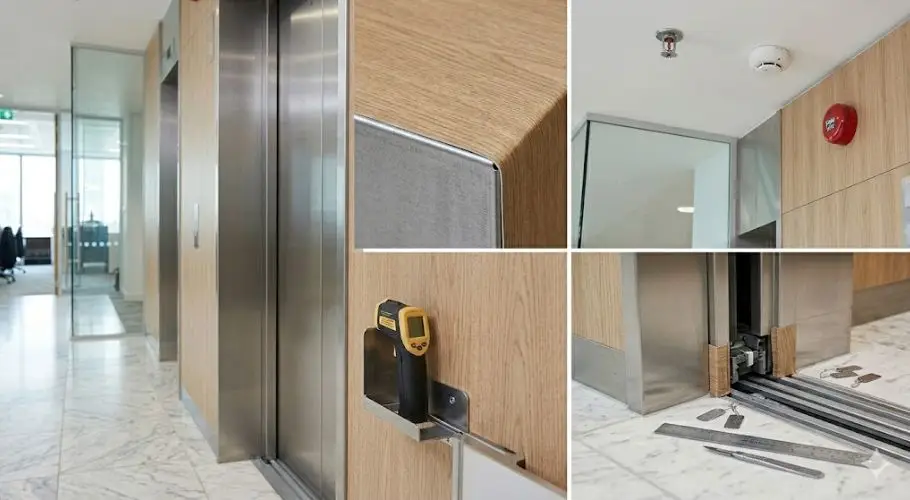
- Elevator interiors: These are treated as a high-risk area. Most codes require Class A rated materials on the walls and doors inside a cab. This is relevant to elevator wrap installations in particular.
- Retail: Bigger stores with high foot traffic have stricter requirements. Smaller boutiques often have more flexibility.
How the Main Film Brands Compare
The films we work with at Resurface Wraps all have fire rating documentation. Here’s where each one sits:
| Brand | US Fire Class | Notes |
|---|---|---|
| 3M DI-NOC | Class A | Tested on hard, non-combustible surfaces like steel and drywall |
| LX Hausys Benif | Class A | Tested on gypsum board and similar surfaces |
| Belbien | Class A | Varies by product series; check the individual data sheet |
| Koroseal Reatec | Class A | Class A on qualifying surfaces |
What to Check Before You Choose a Film
A few things worth going through before settling on a product for a commercial project:
- What class does the code require? Look at the building type and check the relevant code. Know whether Class A, B, or C is needed before looking at products.
- What surface will the film go onto? Check whether it’s a hard, fire-rated surface or a combustible one. That affects which films are suitable.
- Does the test match your surface? Ask for the full test report, not just the class label. The test surface needs to match or be close to yours.
- How old is the documentation? Test certifications can expire. Ask for recent ones, not something from ten years ago.
- Does the rating cover your exact area? Some films are rated for walls but not ceilings. Some are rated for flat surfaces but not wrapped edges. Read the scope of the test.
- Are there local additions to the code? Some local building departments layer extra requirements on top of the standard code. If you’re unsure, check with your local building department before specifying.
If you’re working with us on a wall wrap, door wrap, or elevator interior, we can help put together the fire documentation for your specific job.
Fire Ratings Don't Work in Isolation
Getting a Class A film is one piece of it. The surface it goes onto matters. So does the adhesive. So do any local code variations. A lot of projects get tripped up by assuming the film’s rating carries through regardless of installation conditions, and it doesn’t always work that way.
Fire rating paperwork is also not just for big projects. Even a smaller commercial renovation in a regulated space can need documentation before sign-off. If fire compliance is something you’re likely to face on a job, it’s better to get the data sheets from the start than to chase them at the end. Our resources page has everything downloadable so you’re not waiting on anyone.
A Few Things to Sort Out Before the Job Starts
Fire ratings for architectural films are fairly straightforward once you know the basics. Know what your building code needs, confirm the surface the film will go on, and get the proper test documentation for that combination.If you’re working on a project where fire compliance is going to come up, and you want to check which products apply, drop us a message. We’re happy to help sort out the product and paperwork side before the job gets started.
Frequently Asked Questions
Do architectural vinyl films meet fire safety codes for commercial use?
What does Class A actually mean for a vinyl film?
Does the fire rating change depending on what surface the film goes on?
What fire rating do I need for elevator interiors?
Most US commercial buildings require Class A materials inside elevator cabs under NFPA 101 and the International Building Code. That covers the wall panels, door faces, and any vinyl wrapping applied inside. We supply fire rating documentation for all our elevator wrap projects.
Where do I get the fire rating documents for a project spec?
Data sheets for all four brands are available for download on our fire rating information page. If your project needs documentation for a specific surface or unusual application, get in touch and we can work with the manufacturer to get you what you need.