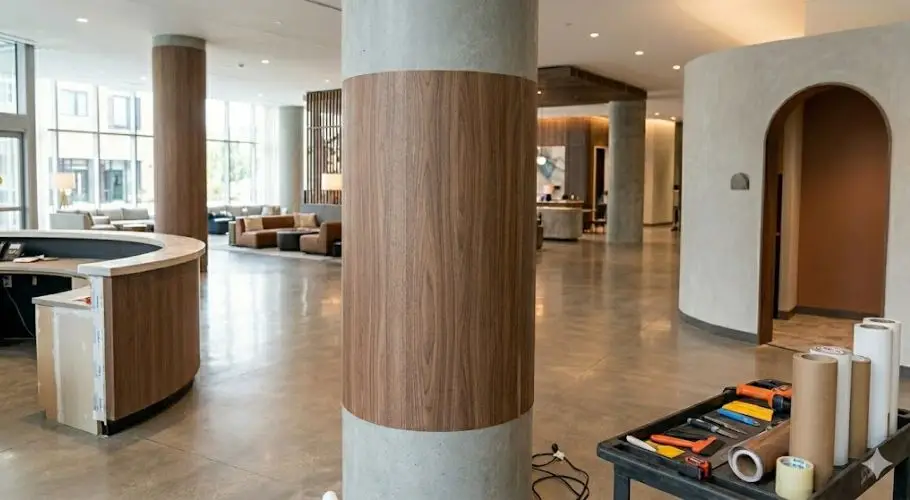
When a space starts looking tired, the default move is usually to tear everything out and start fresh. New doors, new wall panels, new cabinetry. That approach might feel thorough, but it creates a serious amount of waste. Building renovation and demolition account for a large portion of the solid waste that ends up in landfills every year. Replacement materials have to be manufactured, shipped, and installed, and all of that has a footprint.
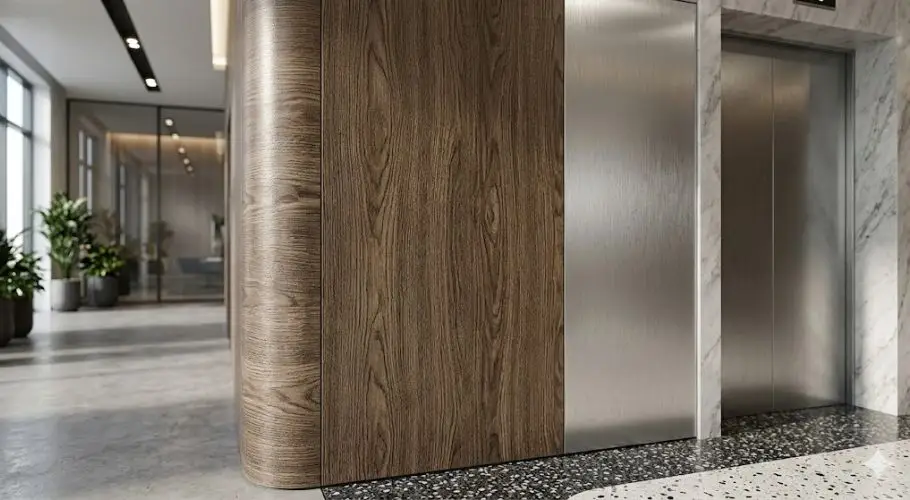
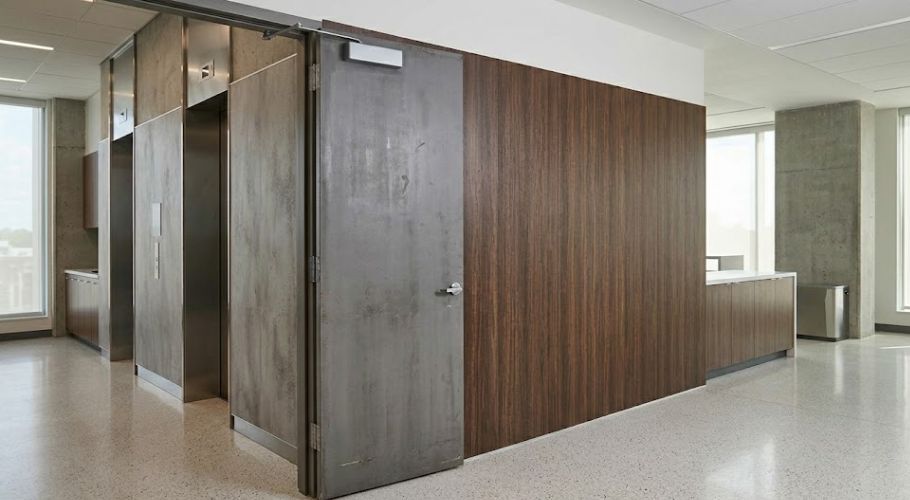
Architectural film takes a different approach. Instead of removing surfaces, you wrap them. The door stays. The elevator cab stays. The wall panel stays. A thin, durable film goes on top, and the space looks updated without any of the debris that comes with full replacement. That basic idea is worth exploring more carefully, because the environmental case for film renovation is stronger than most people realize.
What Is Architectural Film?
Architectural film is a multi-layered vinyl material built to wrap over existing surfaces. It can mimic the look of wood, stone, metal, concrete, fabric, and more without using those raw materials. The film bonds to a surface through pressure-sensitive adhesive. A trained installer applies it to doors, walls, elevator interiors, ceilings, casework, and other building features.
It is used most often in commercial environments. Hotels, corporate offices, hospitals, retail stores, and institutional buildings all use it. The main draws are speed and low disruption. But the environmental angle tends to get skipped over in most conversations about the product. That’s what this post focuses on.
Why Traditional Renovation Generates So Much Waste
Most people underestimate how much waste a standard renovation produces. A lot of it comes from surfaces that were structurally fine but got replaced because they looked old. Here is where the bulk of renovation waste typically comes from:
- Removing and discarding doors that work but look worn
- Pulling out casework and millwork when only the finish has deteriorated
- Demolishing wall surfaces to replace them with new panels
- Stripping elevator cabs and sending the old materials to landfill
- Shipping heavy replacement materials across long distances, adding transport emissions
Each of those waste points can be avoided when the structure underneath is still solid. The film wraps around what’s already there, so nothing has to go.
How Architectural Film Reduces Renovation Waste
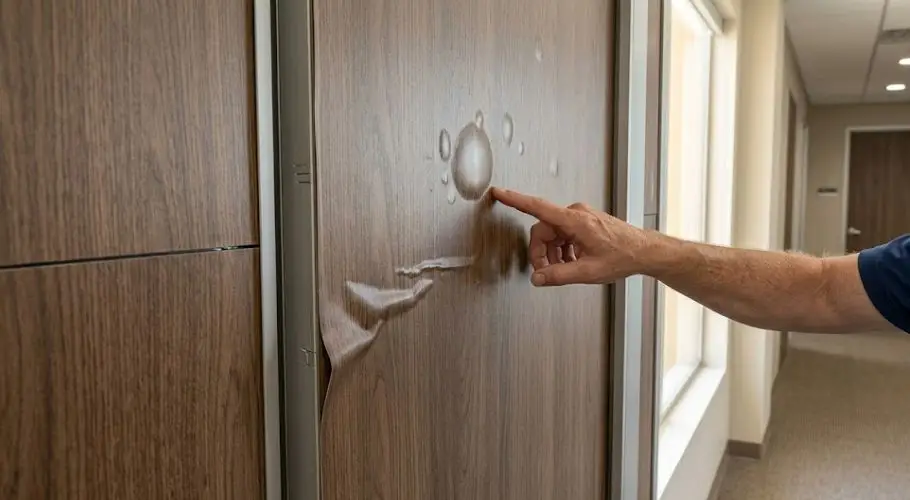
The most direct environmental benefit of architectural film is waste avoidance. If a door is structurally sound but looks beaten up, wrapping it with architectural film for commercial doors keeps that door out of the waste stream entirely. The same applies to elevator cabs, wall panels, casework, and ceilings. The original material stays in place. Nothing gets torn out. Nothing goes to landfill.
This matters at scale. A hotel renovation might involve hundreds of guest room doors. Replacing all of them creates a large volume of demolition debris, plus the manufacturing emissions tied to producing new units. Wrapping them sidesteps both problems at once. Elevator wraps remove the need for structural cab replacement. Wall wraps change the look of entire corridors without any of the dust or downtime that comes with full wall replacement. The environmental logic is consistent across all of these applications.
Other Environmental Benefits to Know
Beyond avoiding landfill waste, there are other environmental factors tied to architectural film renovation:
- No heavy demolition: No jackhammers, no dumpsters outside the building, no clouds of construction dust.
- Lower transport emissions: Rolls of film are significantly lighter than new doors, panels, or elevator cabs. Less weight means less fuel consumed in shipping.
- Extended surface lifespan: Quality film protects the surface underneath and delays the next round of replacement.
- Reduces resource extraction: Wood-look finishes eliminate the need for new timber. Stone-look and metal-look finishes avoid quarrying and smelting. The full range of available finishes covers most design needs without raw material sourcing.
- Shorter project timeline: Faster installs mean less energy consumed over the course of the renovation. Many commercial projects are completed overnight or in phases without shutting down operations.
These gains are not dramatic in isolation. But across a large building or a multi-property renovation program, they add up to a meaningful reduction in impact.
What About PVC?
Most architectural films are made primarily from PVC, short for polyvinyl chloride. PVC has a mixed reputation in sustainability conversations. It is a plastic, it does not biodegrade, and that is a legitimate concern.
But the full picture is more complicated than a simple yes or no on PVC. Durability changes the calculation. A film that holds up for 7 to 12 years on a commercial surface means that surface is not being replaced during that entire period. High-quality films built for commercial use, like those applied in hotel and corporate projects, are made to handle heavy traffic and long service lives. When you compare a PVC wrap to the environmental cost of full surface replacement, including manufacturing, demolition waste, and transport, the film typically comes out ahead. The more useful question is not whether film contains PVC, but whether it lasts long enough to justify its use. In commercial applications, the answer is generally yes.
So Is Vinyl Film Wrapping Worth It for Your Space?
The five problems above show up in almost every commercial renovation project to some degree. Cost overruns, construction mess, long timelines, design limitations, and surface wear are not rare exceptions. They’re regular parts of the process when you’re working with traditional methods.
Vinyl film wrapping doesn’t fix everything. But it does deal with these five problems directly, and it’s been used across hotels, healthcare facilities, retail chains, and corporate offices long enough that the results are well documented. You can browse the full range of applications on the Resurface Wraps site to see what surfaces this works on.
If you’re planning a renovation and want to know whether surface wrapping makes sense for your specific project, reach out to the Resurface Wraps team for a project consultation and quote.
Where Architectural Film Works Best for Sustainability Goals
No renovation product is entirely without environmental impact. Architectural film is a vinyl material. It will eventually be removed and need to be disposed of. PVC recycling options are limited in most regions. Those are real limitations, and they deserve to be said plainly.
But the comparison that matters is film versus full replacement, not film versus nothing. On that comparison, film consistently produces less demolition waste, requires fewer replacement materials, generates lower transport emissions, and causes far less construction disruption. For commercial facilities looking to update interiors without a heavy environmental footprint, architectural film is one of the more practical options available.
If you’re working on a renovation and want to know which surfaces can be wrapped rather than replaced, the full range of applications at Resurface Wraps is a good place to start before committing to a full replacement project. Get in touch to talk through what’s possible for your specific space.