When a surface looks worn or outdated, most people think of paint first. It is a familiar option. You know how it works and you know what it costs upfront. But for commercial spaces that see daily wear, paint often needs more attention than people expect. Vinyl wrap is a different approach, and it is worth understanding how the two compare before making a decision. It applies directly over existing surfaces, skips most of the prep work that paint requires, and comes in a wide range of finishes that hold up well in busy commercial spaces.
This blog covers the main differences between vinyl wrap and paint. Cost, durability, installation, surfaces, and where each one makes sense.
What Paint Actually Involves
Paint works well for low-traffic areas or simple touch-ups. It is easy to source, most contractors can apply it, and the upfront cost is usually lower than other options. For a back office or a storage room, paint is often a reasonable choice.
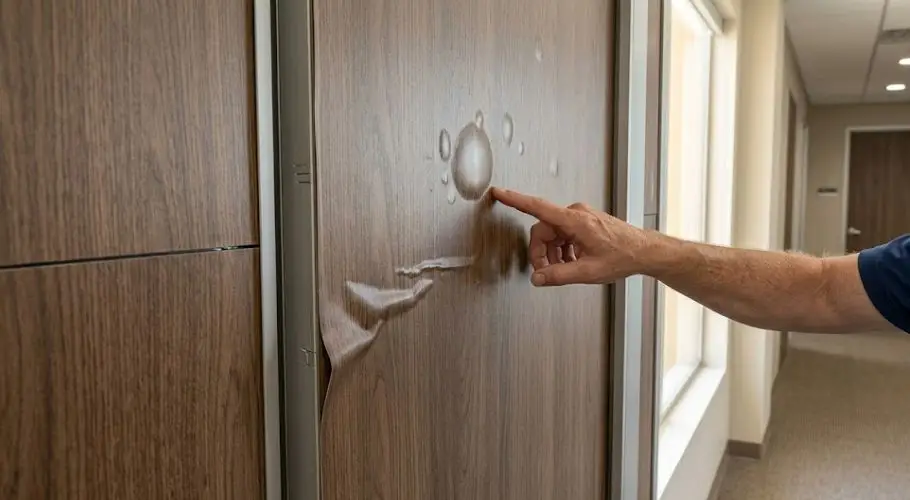
In commercial spaces with heavy daily use, paint tends to break down faster. Hallways, elevator interiors, lobby walls, and door surfaces take a lot of contact every day. Paint chips, scuffs, and fades in these areas. When a section gets damaged, touching it up is harder than it sounds. New paint rarely matches old paint exactly, and patchy walls can end up looking worse than the original damage.
How Vinyl Wrap Works
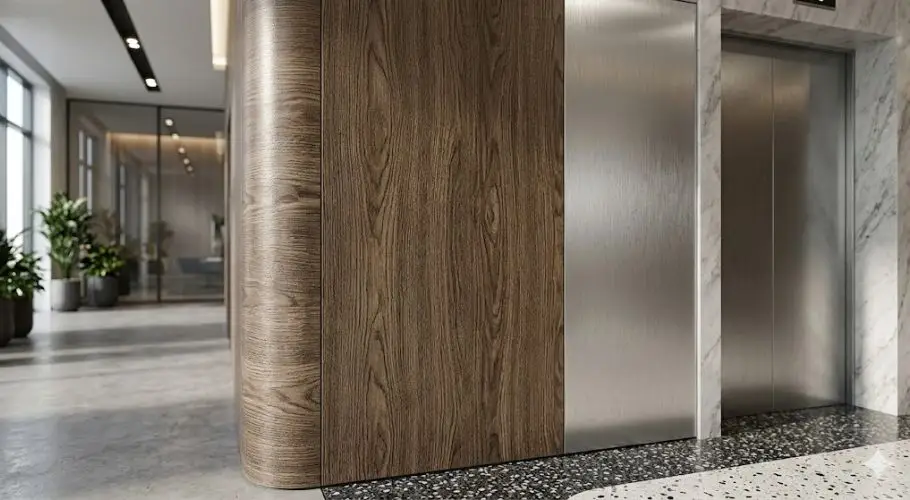
Vinyl wrap is a thin adhesive film that bonds directly to an existing surface. It does not require removing the original material. It applies over the top, creating a smooth finish. It comes in many textures including wood grain, marble, concrete, brushed metal, matte, and gloss solid colors.
The film has multiple layers. The outer layer resists scratches and moisture. The adhesive layer beneath holds it firmly without damaging what is underneath. When you remove it later, it peels off cleanly. There is no sanding, no stripping, and no residue left behind. Film construction and grade vary depending on the surface type and how much wear it needs to handle, which is why vinyl film specifications differ from one application to the next.
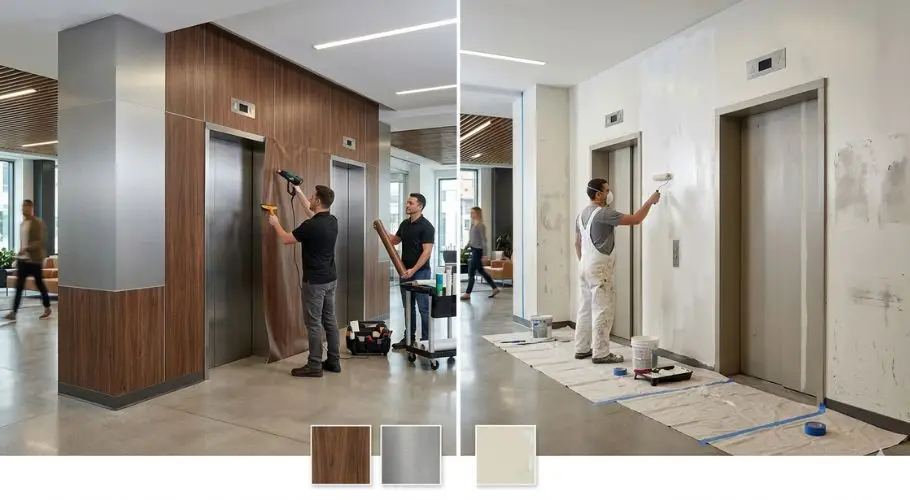
How the Two Compare Side by Side
Here is a straightforward look at how vinyl wrap and paint stack up across the areas that matter most in commercial settings:
| Factor | Vinyl Wrap | Paint |
|---|---|---|
| Durability | Handles daily contact from hands, bags, and equipment | Chips, scuffs, and fades under regular friction |
| Moisture resistance | Holds finish in humid conditions without peeling | Bubbles and peels in bathrooms and kitchens over time |
| Maintenance | Minimal upkeep, wipe clean with a damp cloth | Touch-ups needed every one to two years in busy areas |
| Lifespan | Seven to twelve years in commercial settings | Five to seven years before a full repaint is needed |
| Installation time | Faster, spaces usable same or next day | Multiple coats and drying time between each |
| Disruption | No fumes, no sanding dust, no extended ventilation | Fumes and dust require downtime and ventilation |
| Reversibility | Peels off cleanly without surface damage, works great for lease-end requirements | Requires stripping and full prep to redo |
| Finish consistency | Uniform color and texture across the full surface | Brush marks, roller patterns, or uneven coverage possible |
| Upfront cost | Higher per square foot | Lower per square foot |
| Long-term cost | Lower over time due to fewer maintenance cycles | Adds up with repeated touch-ups and repaints |
How Long Does Each One Last?
In a low-traffic environment, a painted wall can hold up for several years without much attention. In commercial spaces like hotel corridors, retail stores, healthcare facilities, or restaurant interiors, paint usually needs touch-ups within two years and a full repaint every five to seven years.
Good quality vinyl wrap installed correctly in a commercial setting typically lasts between seven and twelve years. Maintenance is minimal. Basic cleaning with a damp cloth is enough for most surfaces. Hotel corridors, healthcare lobbies, and retail fit-outs are among the commercial interior resurfacing projects where vinyl consistently outlasts paint by a significant margin.
Cost: Upfront vs. Long Term
Vinyl wrap usually costs more upfront than paint on a per-square-foot basis. That part is straightforward. But the total cost over several years looks different when you account for maintenance and repainting cycles.
Paint costs to consider:
- Surface prep, priming, and multiple coats
- Touch-ups every one to two years in busy areas
- Full repaint every five to seven years
- Downtime and disruption during each round of work
Vinyl wrap costs to consider:
- Film material based on type and quality
- Professional installation
- Very little maintenance cost year over year
- No repainting cycles needed
- Minimal disruption during installation
Over a ten-year period, vinyl wrap often works out to be the more cost-effective option in high-traffic commercial spaces. Not always, but often enough that it is worth calculating before committing to paint.
What Surfaces Can Be Wrapped?
More surfaces can be wrapped than most people expect. Vinyl wrap is not limited to walls. In commercial renovation projects, it is commonly applied to:
- Interior and exterior doors
- Elevator cab walls and ceiling panels
- Elevator landing surrounds and frames
- Millwork, casework , and cabinetry
- Reception desks and countertops
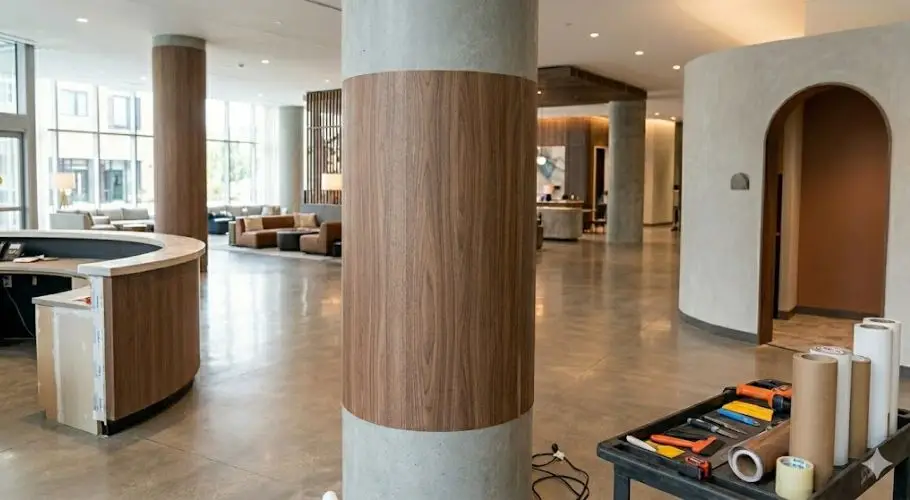
- Columns and structural pillars
- Ceiling tiles
- Retail fixtures and display units
- Storefront elements
The main requirement is that the surface is smooth, solid, and properly cleaned and prepped before installation. Each of these falls under the broader category of architectural vinyl wrap applications used in commercial interior renovation.
When Paint Is Still the Right Call
Vinyl wrap is not the right answer in every situation. There are cases where paint makes more sense.
- Heavily textured surfaces: film does not bond cleanly to rough or uneven textures
- Irregular shapes and detailed trim: complex profiles are hard to cover neatly with vinyl
- Very low traffic areas: a back office or storage room does not need the durability vinyl offers
- Limited starting budget: if upfront cost is the main concern and long-term maintenance is not, paint costs less to start
- Small isolated areas: for a single wall in a low-use space, the cost difference does not justify wrapping
The decision depends on the space, the traffic it gets, and how long the finish needs to last. The team at Resurface Wraps has worked on commercial projects ranging from single door replacements to full interior renovations, which gives a practical sense of where each solution tends to make sense.
Where Vinyl Wrap Makes Sense
For most commercial interiors with regular foot traffic and daily contact, vinyl wrap holds up better than paint over time. Hotels, hospitals, office buildings, and retail spaces have used architectural vinyl film for years because it handles heavy use well and keeps maintenance requirements low.
If you manage a commercial property and need surfaces that stay looking consistent without frequent repainting, vinyl wrap is worth comparing properly against paint. The upfront cost is higher, but the maintenance cycle is lighter, installation causes less disruption, and the finish lasts longer in demanding environments.
Final Thoughts: Which One Actually Works for Your Space?
Paint and vinyl wrap both have their place. Paint works well where traffic is low and budgets are tight. Vinyl wrap works better where surfaces take daily wear, where downtime is limited, and where the finish needs to last without regular touch-ups.
The right choice depends on what the surface has to handle every day. Running the numbers across a realistic timeframe, not just the day-one cost, usually makes the answer clearer. For commercial spaces where durability and low maintenance actually matter, vinyl wrap tends to be the more practical long-term option.